
Cezanne in the Joachim Gasquet archives in the Bibliothèque Méjanes
Paul Smith
Actes du colloque « Odyssée Cezanne », 25 -28 septembre 2025, Aix-en-Provence.
What follows has three related objectives. First, it aims to provide an overview of the letters and manuscripts in the Joachim Gasquet archives in the Bibliothèque Méjanes relating to Cezanne. Secondly, it attempts to redress certain errors and lacunae in my own publications on the topic[1]Paul Smith, ‘Joachim Gasquet, Virgil, and Cézanne’s Landscape: « My Beloved Golden Age »‘, Apollo, 147.439 (October 1998), pp. 11-23; and Paul Smith, ‘Les paysages tardifs de Cézanne, ou la perspective de la mort’, in Cézanne en Provence, ed. by Philip Conisbee and Denis Coutagne (Réunion des Musés nationaux, 2006), pp. 80-95 and 342-5.. And thirdly, it seeks to ascertain what light the Gasquet documents shed on his book, Cezanne, written in 1912-13 and published in 1921[2]Joachim Gasquet, Cézanne (Bernheim-Jeune, 1921). On the date of its writing, see the author’s biography by Marie Gasquet in Joachim Gasquet, Des Chants d’amour et des hymnes (Flammarion, 1928), p. 56..
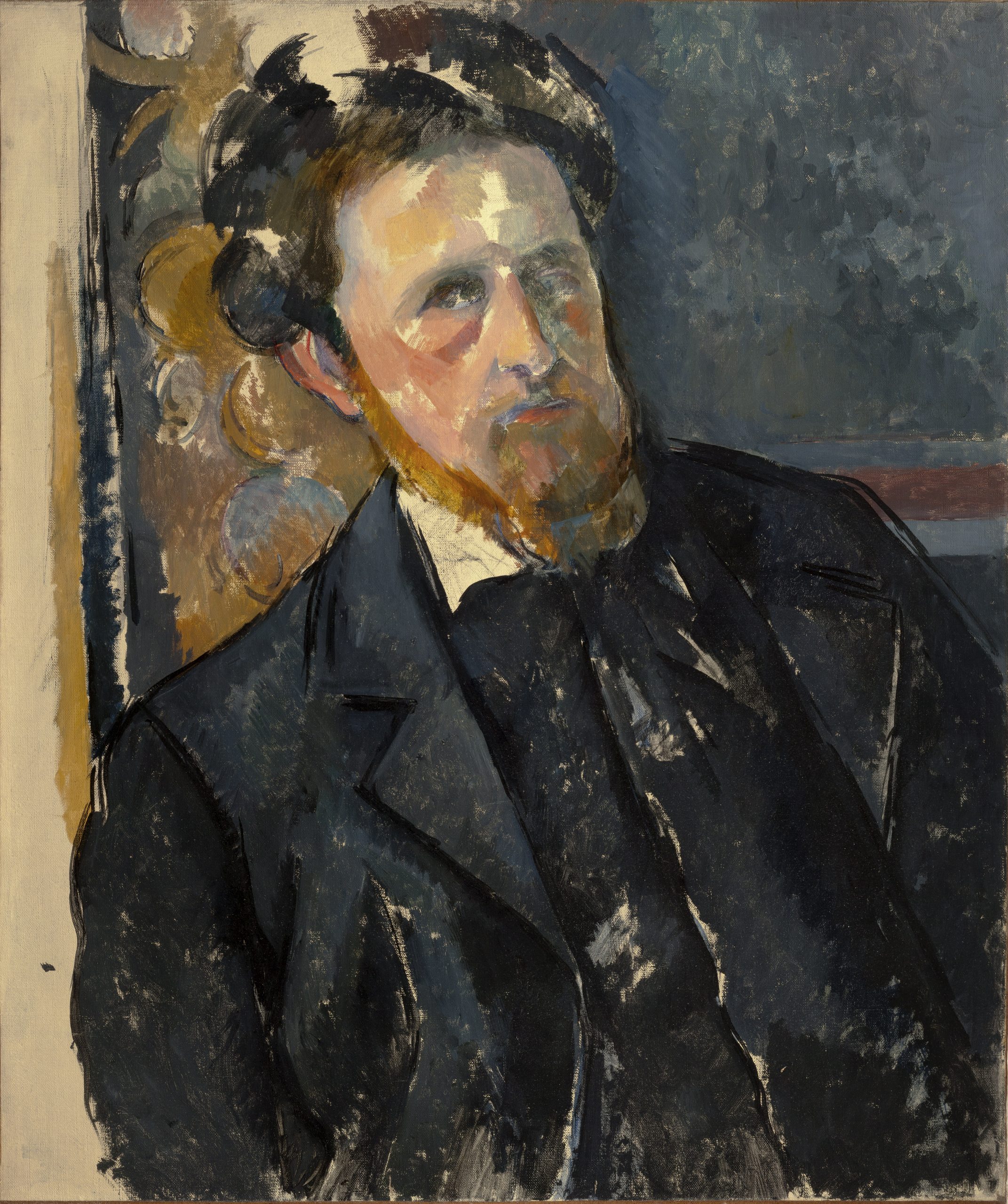
Fig. 1. Paul Cezanne, Portrait of Joachim Gasquet. Oil on canvas, 65 x 54 cm. Národní Galerie, Prague O 3202 (FWN 521). Photo © National Gallery Prague 2026.
Joachim Gasquet was significant enough to Cezanne for the artist to paint his portrait (Fig. 1; FWN 521) – which he did in his studio at the Jas de Bouffan or the adjacent farm building, where the blue skirting is surmounted by a dark red band. Indeed, in the years immediately after 1896 when they first met, Cezanne’s letters show that they were close both socially and intellectually. Consequently, even if their relationship cooled towards the turn of century, Gasquet’s literary remains belonging to this period are highly informative about the beliefs and values they shared – even as they cast light on differences between them that were to become in increasingly apparent.
The remains in question are now housed in the Gasquet archives in the Bibliothèque Méjanes in Aix-en-Provence. They can be divided for the sake on convenience into letters written by Cezanne to Gasquet; letters to Joachim and Marie Gasquet from his literary associates mentioning Cezanne; manuscripts of poems and novels by Gasquet which allude to Cezanne indirectly; and letters between Joachim and Marie Gasquet which refer to the painter. The Cezanne letters are well known, as they were published by John Rewald in 1960. The other material is less familiar, since it was not published until the late 1990s, first by Isabelle Cahn, and subsequently by myself, Nina Athanassoglou-Kallmyer, Jean Colrat, Nancy Locke, and Neil McWilliam[3]For an in-depth account of the relationship between Cezanne’s, Gasquet, and the Félibres, see Nina Athanassoglou-Kallmyer, Cezanne and Provence: The Painter in His Culture (University of Chicago Press, 2003), pp. 217-231. For a searching study of the political dimension of Gasquet’s work and activities, see Neil McWilliam, The Aesthetics of Reaction: Tradition, Faith, Identity, and the Visual Arts in France, 1900–1914 (Brepols, 2021), pp. 191-237..
Gasquet and John Rewald
Rewald’s interest in Gasquet dates back to the 1930s. By his own account, it was motivated by an ambition to ascertain whether the ‘conversations imaginaires’ recorded in Gasquet’s monograph bore any relation to ideas Cezanne expressed in his correspondence with the writer, only fragments of which had appeared in that publication[4]John Rewald, Cézanne, Geffroy, et Gasquet (Quatre Chemins/Editart, 1960) p. 7. See Joachim Gasquet, Cezanne, p. 78 (the short preface Gasquet to the second part of the book entitled Ce qui’il m’a dit), which states: ‘Je vais essayer de les [Cezanne’s statements] transcrire tels quels, m’aidant de ses lettres, autant de celles qu’il m’adressa que de celles que j’ai pu me procurer ou qui furent publiées par ceux qui les reçurent, comme la précieuse correspondance que nous communique M. Émile Bernard à la suite de ses Souvenirs. Toutes les fois que je le pourrai, je transcrirai les paroles mêmes de Cézanne. Je n’inventerai rien, — que l’ordre dans lequel je les présente.’ The book published here letters in their entirety. Those of 5 and 30 April 1896 (pp. 55 and 56) concern a contretemps. And the letter of 4 January 1901 published in facsimilie (p. 127), expresses the solidarity Cezanne felt for Gasquet. See also p. 43. For an analysis of the mostly very short excerpts that Gasquet made (and altered) from the letters he (and his father) received from Cezanne, see Conversations avec Cézanne, ed. by Michael Doran (Macula, 1978), pp. 106-161 and 206-214, nn. 2, 5, 6, 9, 12, 21, 31, 32, 98, and 99.. He then recalls how he visited Gasquet’s widow, Marie, in the 1930s to enquire about the letters, only to be told that they were lost, having been placed in the draw of an old table which had been sold. In fact, of course, Marie had kept them. And in 1952 she donated them to the Bibliothèque Méjanes. Rewald was then informed about the donation by the chief librarian, Bruno Durand.
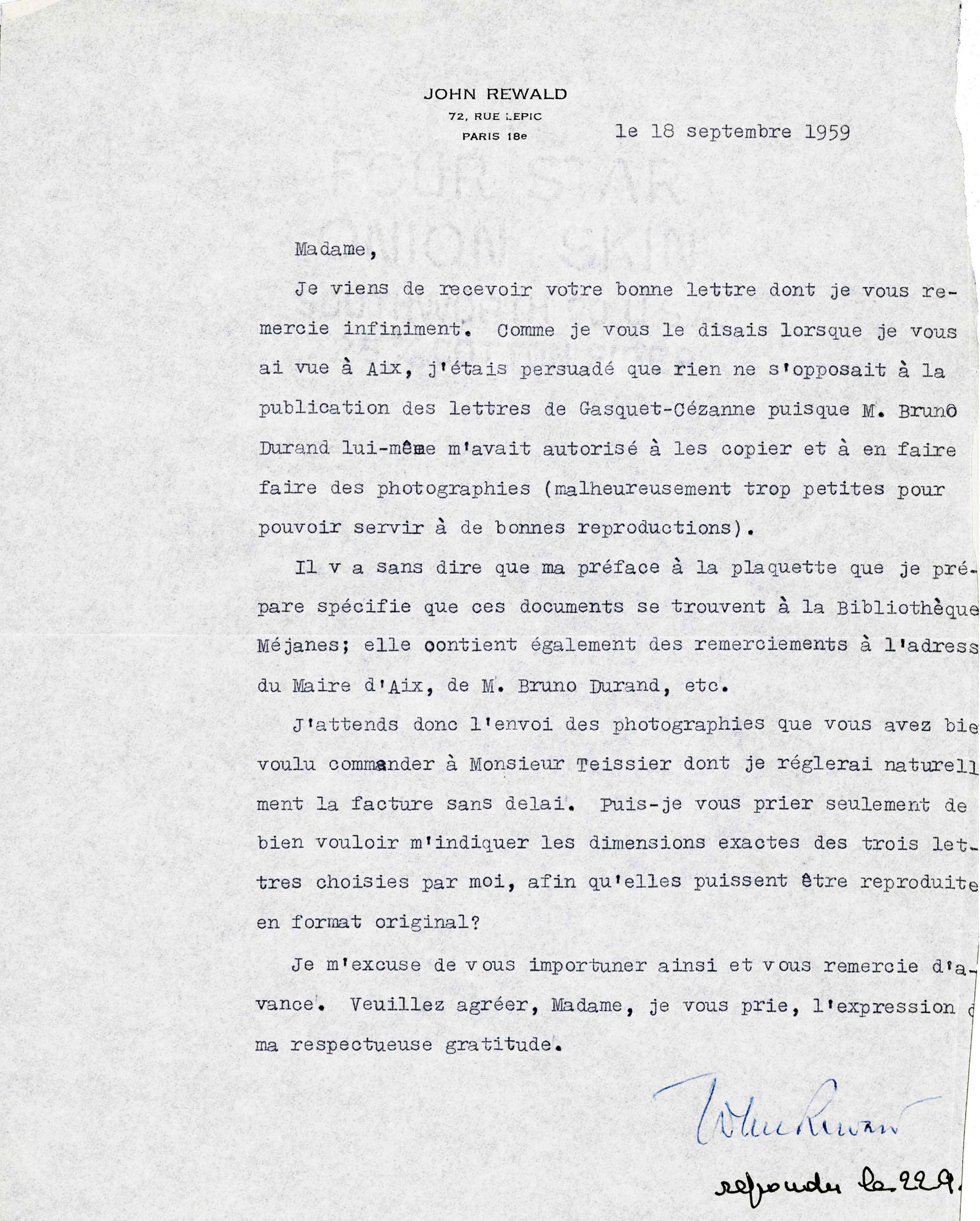
Fig. 2. Letter from John Rewald to the Bibliothèque Méjanes, 18 September 1959
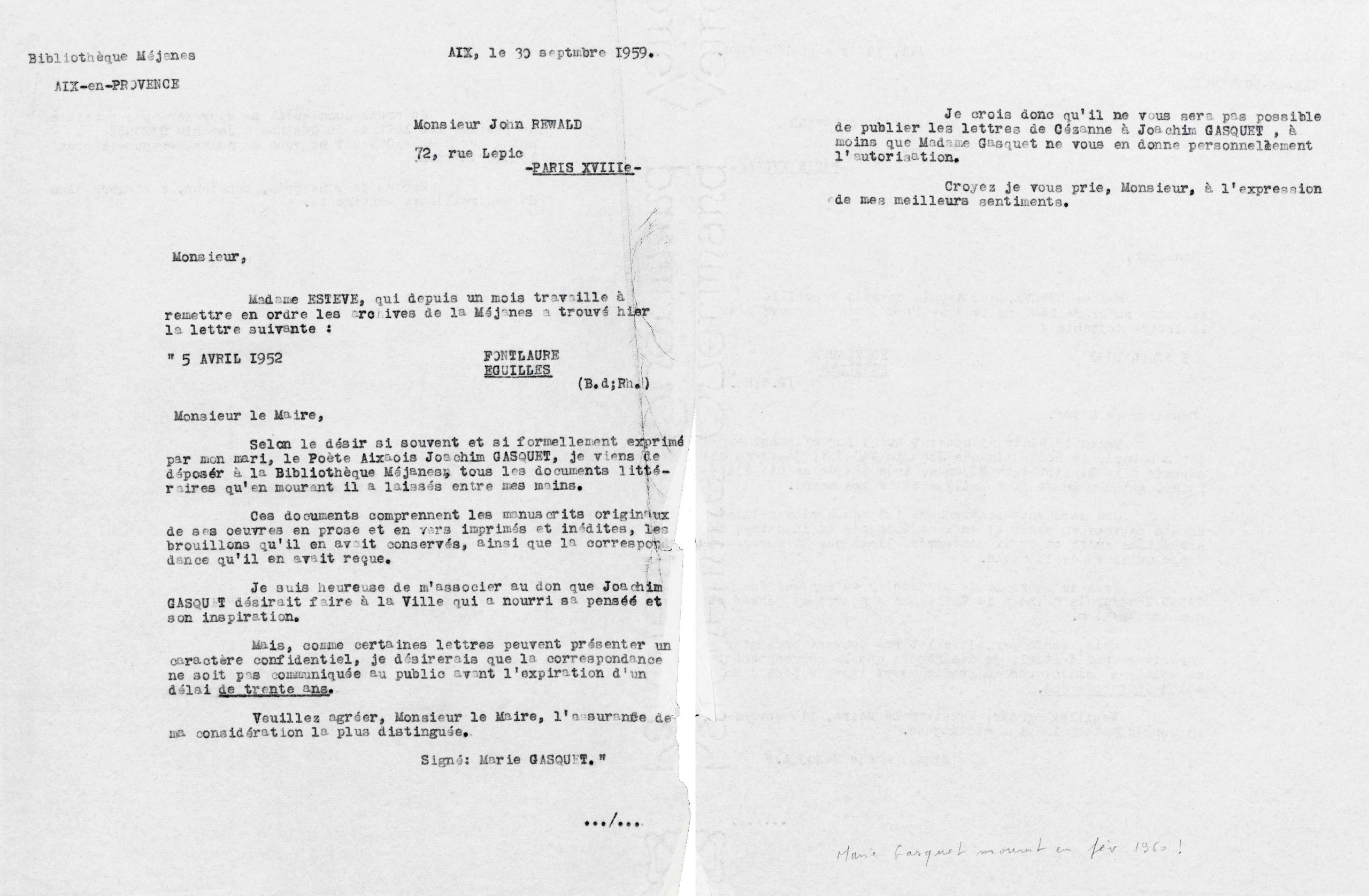
Fig. 3. Reply from the Bibliothèque Méjanes, 30 September 1959. Archives de la bibliothèque Méjanes, Aix-en-Provence.
Correspondence in the library shows that when Rewald asked for permission in September 1959 to publish the letters, he was told he could not because Marie’s entire donation had been embargoed until 1982 because of the ‘confidentiel’ nature of some correspondence[5]Letter from an unknown correspondent in the Bibliothèque Méjanes to John Rewald, 30 September 1959.. Notwithstanding, with help from the mayor of Aix, Henri Mouret, Rewald did publish Cezanne’s letters in his book, Cézanne, Geffroy et Gasquet, which appeared in February 1960. (Marie, coincidentally, died in the same month.) And here, Rewald concluded that the conversations Gasquet included in his book ‘n’ont pu ȇtre basés qu’en une très faible mesure sur les lettres de Cezanne.’[6]Rewald (Cézanne, Geffroy, et Gasquet), p. 8.
In the same text, Rewald cited an article from 1921 by Jacque-Emile Blanche, which states of Gasquet: ‘Il a imaginé un Cezanne héroique, lyrique, qui est un surhomme provençal, et un peu Gasquet lui-même. Ce dialogue platonicien entre Cezanne et le Poete n’est autre qu’une conversation de Gasquet avec Gasquet et les multiples dieux de son Olympe.’[7]Rewald (Cézanne, Geffroy, et Gasquet), p. 55; citing Jacques-Emile Blanche, ‘Gasquet “L’Animateur”’, Comdedia, 13 May 1921. Rewald learned of this article from an excerpt adjoined to a letter from Pierre Angrand of 26 Jan 1957, now in Rewald’s papers in the National Gallery, Washington[8]Washington DC, National Gallery of Art Archives, John Rewald Papers, SC.03, Box 38.. In the same archive is another letter, from Charles Camoin of 6 May 1958, which Rewald cited in his book, attesting to his wariness of the ‘universitaires’ who gathered at the writer’s house[9]Rewald, Rewald (Cézanne, Geffroy, et Gasquet), p. 42 n. 57..
Letters from Gasquet’s literary associates
Another writer whose opinion chimes in with Rewald’s is Edmond Jaloux, who met Cezanne at Gasquet’s house[10]Jaloux Edmond, Les Saisons littéraires 1896-1903 (Plon, 1921), vol. 1, p. 71; and Gasquet, Cézanne, 1921, 60.. He stated in Les Saisons littéraires of 1921, that Gasquet’s book attributed to the painter ‘des phrases qui appartenaient à Gasquet lui-même’[11]Jaloux, Les Saisons littéraires, p. 75..
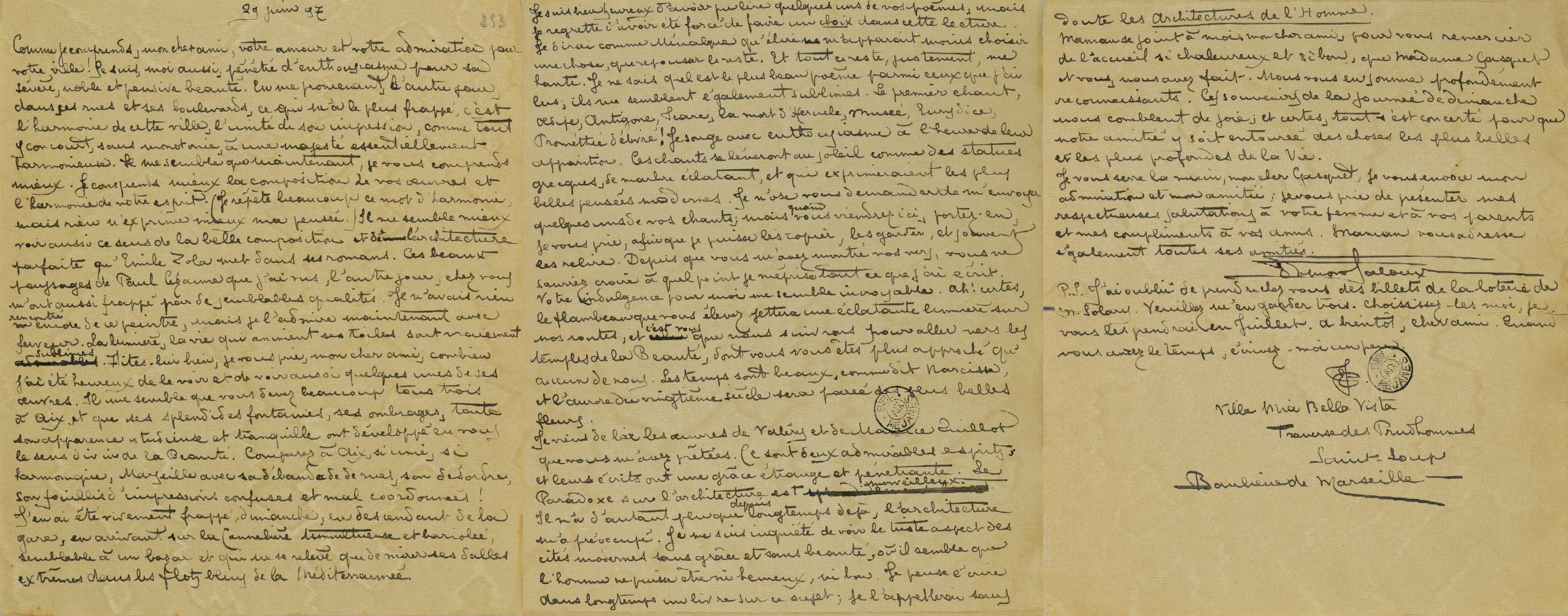
Fig. 4. Letter fom Edmond Jaloux to Joachim Gasquet, 29 June 1897. Bibliothèque Méjanes, Aix-en-Provence, Ms 1870 (176). Photo Paul Smith.
Jaloux nevertheless told Gasquet in a letter June 1897, with respect to the walks they had taken around Aix together:
Ce qui m’a le plus frappé, c’est l’harmonie de cette ville… Je comprends mieux la composition de vos oeuvres et l’harmonie de votre esprit… Ces beaux paysages de Paul Cézanne que j’ai vus, l’autre jour, chez vous m’ont aussi frappé par de semblables qualités… je l’admire maintenant avec ferveur…. Dites-lui bien … combien j’ai été heureux de le voir et de voir aussi quelques-unes de ses oeuvres[12]Cited in Smith ‘Les paysages tardifs’, p. 90..
There is some evidence, then, that Cezanne, Gasquet, and his literary associates did at least exchange ideas. Other writers in Gasquet’s orbit were equally keen to engage in dialogue with Cezanne. Among these was Eugène Montfort, one of founders of the Naturiste movement[13]On Montfort, see Athanassoglou-Kallmyer, Cezanne and Provence, pp. 216-217 and 219-220; and Nina Athanassoglou-Kallmyer, Art and Monist Philosophy in Nineteenth Century France From Auteuil to Giverny (Routledge, 2024), p. 148 n. 2..
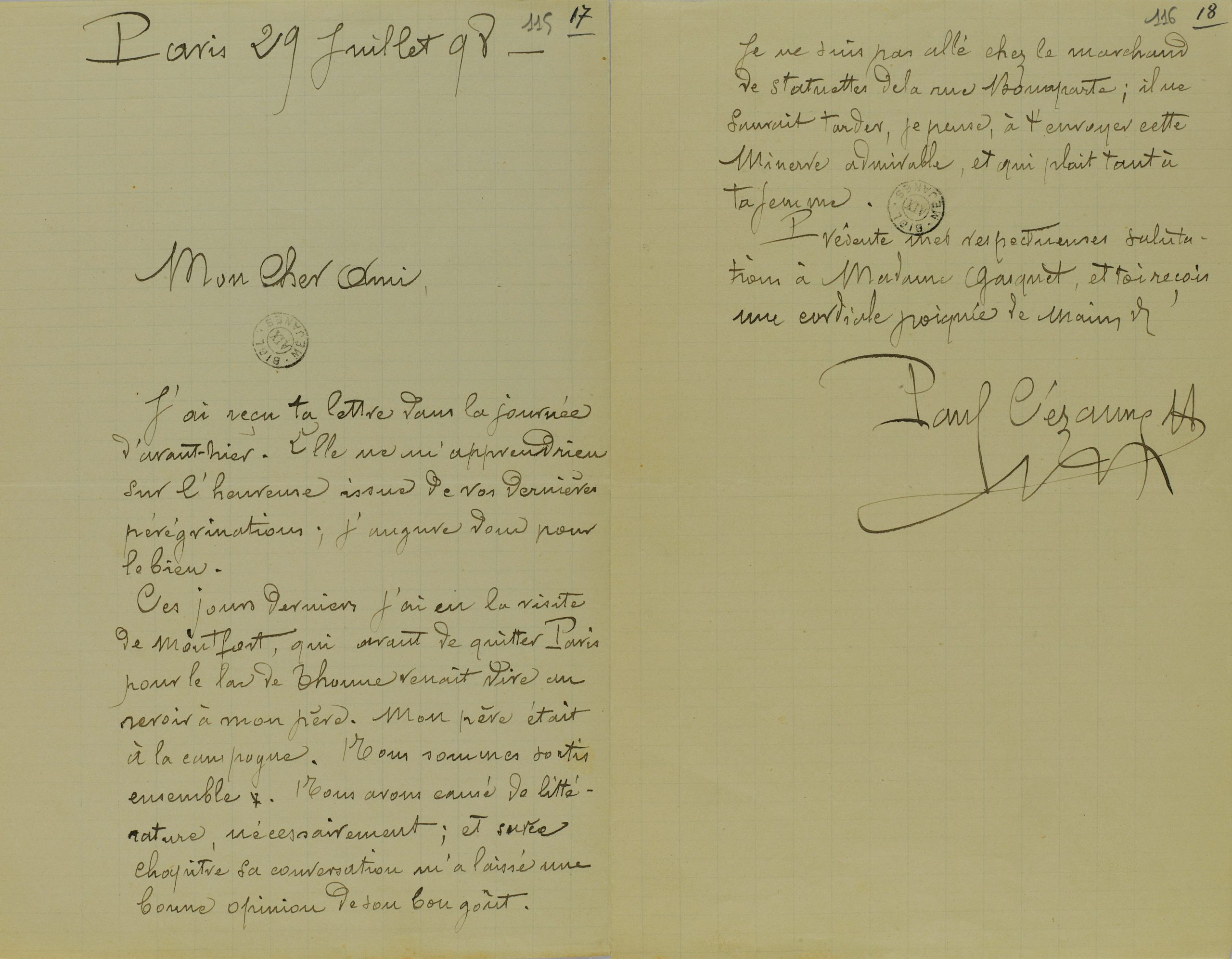
Fig. 5. Letter from Paul Cézanne fils to Eugène Montfort, 29 July 1898. Bibliothèque Méjanes, Aix-en-Provence, Ms. 1868 (1734). Photo Paul Smith.
According to a letter of 29 July 1898 from Paul Cezanne fils to Gasquet, discovered by Isabelle Cahn, Montfort visited Cezanne’s apartment in Paris, but missed the painter who was in the countryside[14]See Isabelle Cahn, ‘Chronologie’, in Cézanne, ed. by Françoise Cachin and Joe Rishel (Réunion des musées nationaux, 1996), pp. 527-569 (p. 556).. Montfort made this visit some two weeks after receiving a letter from Cezanne, first published by Jean-Claude Lebensztejn[15]Jean-Claude Lebensztejn, Paul Cezanne: Cinquante-trois lettres (L’Échoppe, 2011), p. 47.. In this, the artist thanked the writer for the gift of a ‘œuvre littéraire … par l’intermédiaire de Joachim Gasquet.’ And he added: ‘J’aurai le plus grand plaisir à en prendre connaissance.’ The work Cezanne mentioned was probably Montfort’s novel, Chair, of 1898 – series of musings about sexual love. In the same year, Montfort published his Exposé du naturisme, in which he wrote:
Lorsque deux êtres se découvrent toute leur leur âme, ils communient, c’est ce qu’on appelle l’amour, c’est ce qu’il y a de plus merveilleux dans la vie, c’est la plus claire fontaine de beauté…. Et voilà ce que c’est que l’esprit du naturisme. Ce sera, messieurs, le rôle des poètes de chanter la beauté du monde et le resplendissement des hommes. Ils prépareront ainsi l’avènenment de l’humanité de Dieu.
Love, the soul, and God are thus all intimately connected in Montfort’s cosmology. And much the same, it will emerge, is true of Gasquet’s in those writings that touch on Cezanne.
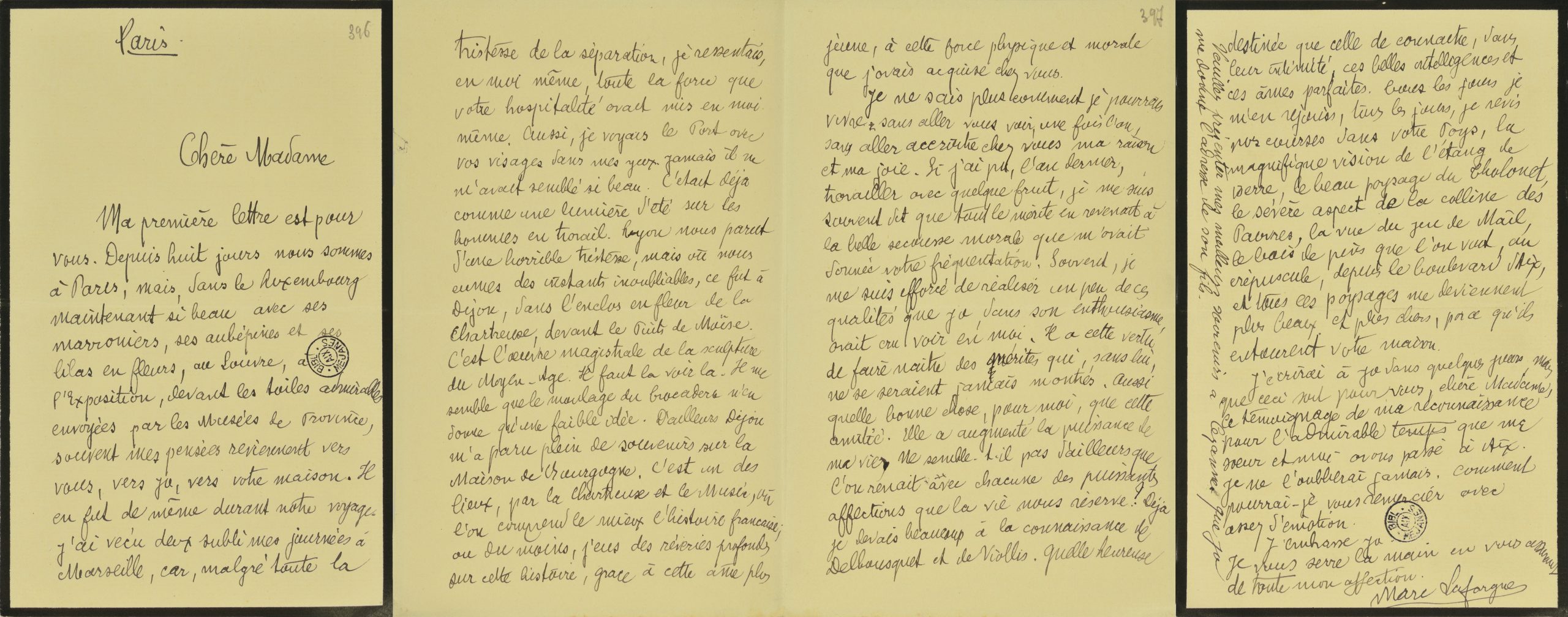
Fig. 6. Letter from Marc Lafargue to Marie Gasquet, 1906. Bibliothèque Méjanes, Aix-en-Provence, Ms. 1870 (1736). Photo Paul Smith.
There is further evidence of dialogue between Cezanne and Gasquet’s associates in a letter from the poet, Marc Lafargue, to Marie Gasquet of 1906[16]Published in Smith, ‘Les paysages tardifs’, p. 90. The letter is datable to 1906 since the fact that it is on mourning stationary indicates it was written shortly after the death of Marie’s father, the Provençal poet Marius Girard.. (He had met Cezanne through Gasquet around 1897[17]Gasquet, Cézanne, 1921, 60..) In this letter Lafargue told Marie:
je revis nos courses dans votre pays, la magnifique vision de l’étang de Berre, le beau paysage du Tholonet, le sévère aspect de la colline des Pauvres, la vue du jeu de Maîl, le bois des pins que l’on voit, au crépuscule depuis le boulevard d’Aix.
And in marginal note he added: ‘Veuillez présenter mes meilleurs souvenirs à Cézanne’.
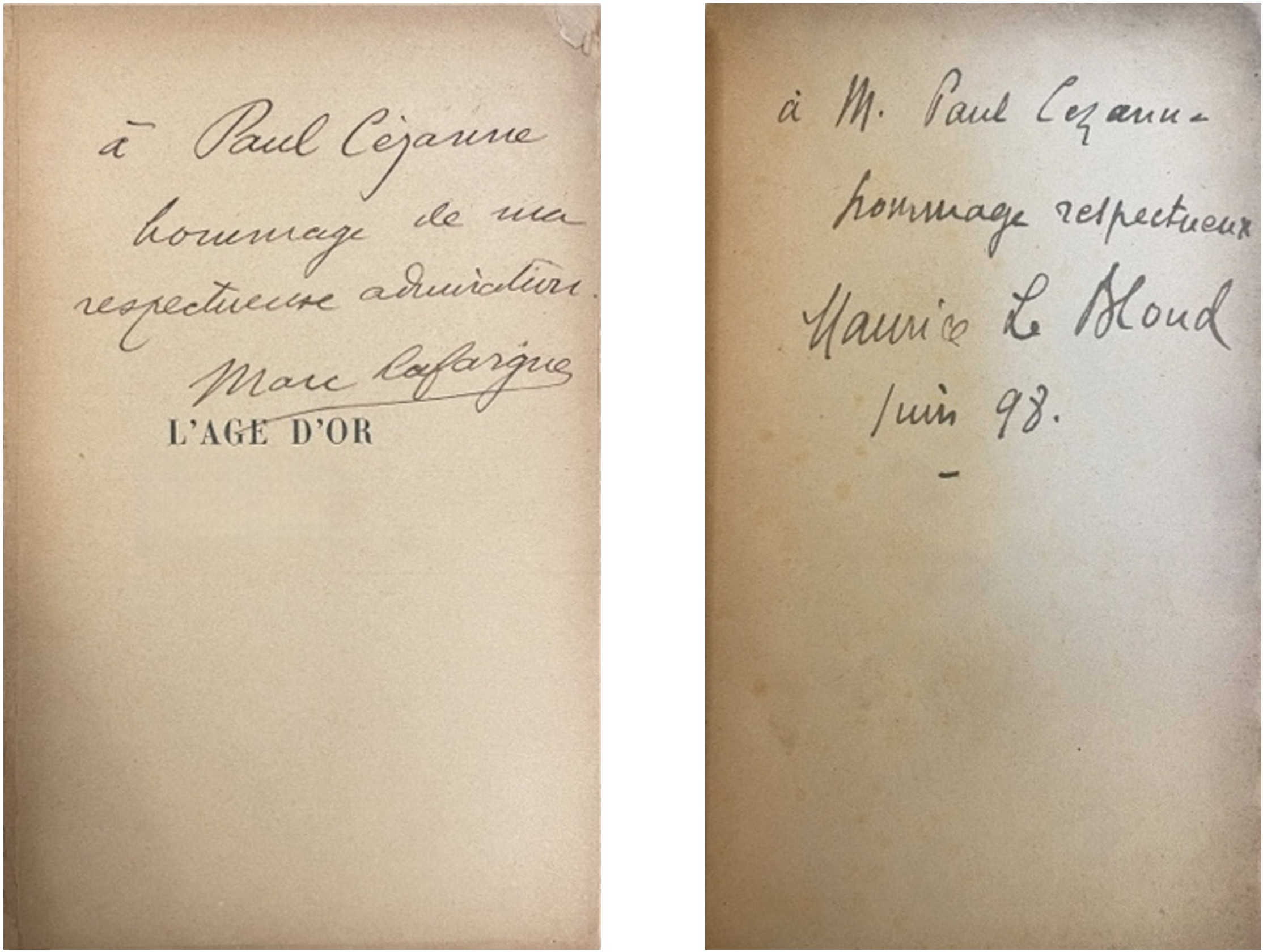
Fig. 7. Half-title of the copy of Marc Lafargue’s L’Age d’or of 1903 with an inscription to Cezanne. Harry Ransom Humanities Research Center, University of Texas at Austin.
Fig. 8. Free endpaper of the copy Maurice Le Blond’s Essai sur le Nauturisme of 1898 with an inscription to Cezanne. Harry Ransom Humanities Research Center, University of Texas at Austin.
Elsewhere, I pointed out similarities between Cezanne’s affection for the old olive tree in his garden, which Gasquet recalls he regarded as a ‘camarade’, and Lafargue’s description of a pine as a ‘compagnon’ in a poem in his 1903 collection, L’Age d’or[18]Smith, ‘ Joachim Gasquet’, p. 15. Cezanne’s remark about the olive is recorded in Gasquet, Cézanne, p. 73; see also pp. 51, 72.. Cezanne’s copy, with an inscription from Lafargue, is now in the Carlton Lake collection at University of Austin. But the artist evidently did not read it, since its pages remain uncut[19]PQ 283 L4 LAK. The book previously belonged to Jean-Pierre Cezanne.. In the same collection, is Cezanne’s copy of Maurice Le Blond’s Essai sur le naturisme of 1898, which also carries a dedication from the author[20]PQ 283 L4 LAK.. This was opened by Cezanne, although it paid the artist a somewhat backhanded compliment to the effects that:
Cataloguer les individus et les phénomènes, les étiqueter à la manière des botanistes, cela n’est ni émouvant, ni sublime…. Mais qu’importent les erreurs d’une époque, puisque seules les œuvres demeurent, et que Zola et Cézanne, Manet et Monet ont illustré les temps modernes d’une gloire impérissable[21]Maurice Le Blond, Essai sur le naturisme (Mercure de France, 1896), pp. 114-115..
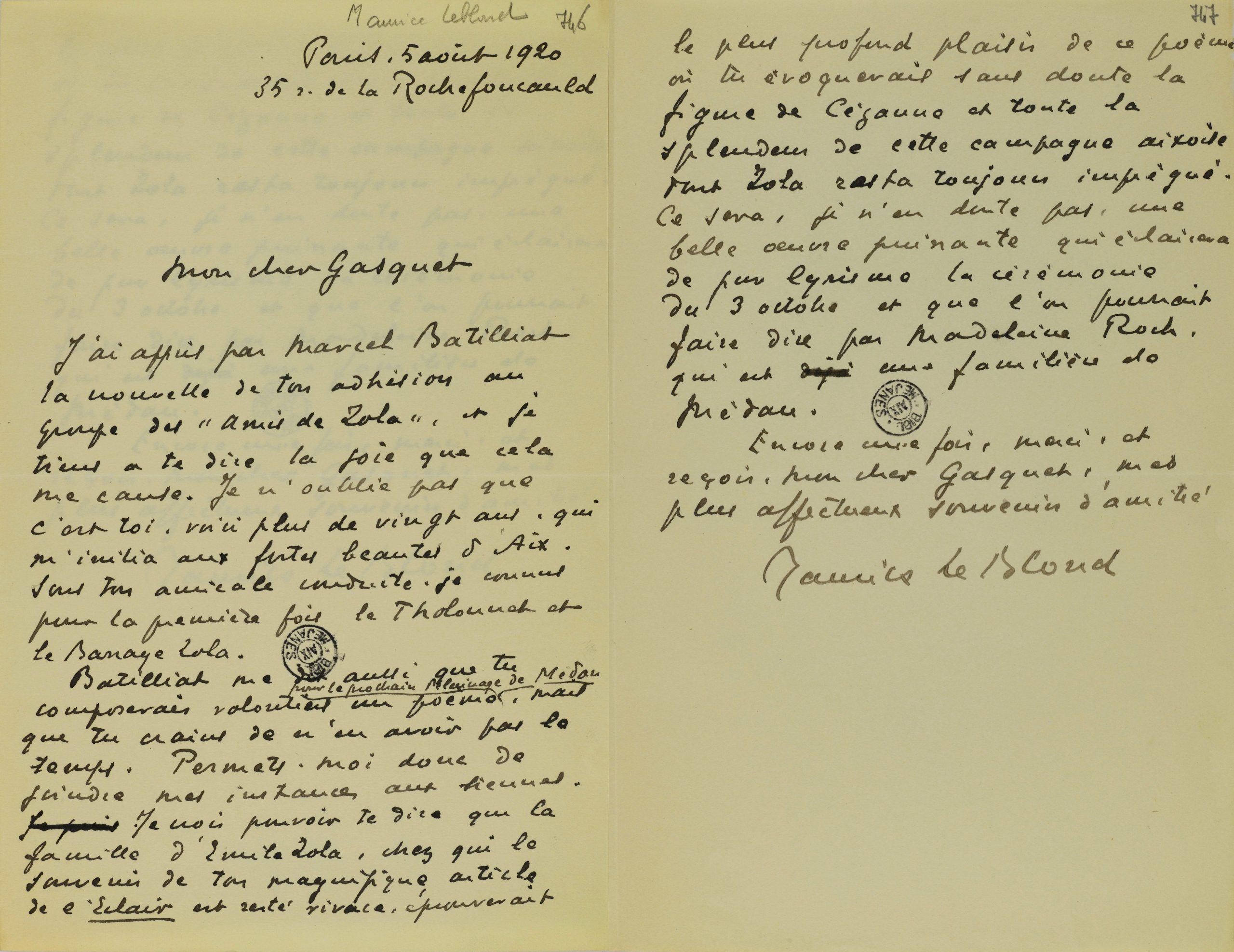
Fig. 9. Letter from Maurice Le Blond to Joachim Gasquet, 5 August 1920. Bibliothèque Méjanes, Aix-en-Provence, Ms. 1870 (1736). Photo Paul Smith.
Le Blond undoubtedly met Cezanne through Gasquet, as attested by a letter of 1920, in which Zola’s son-in-law told the Aixois writer, with regard to a work underway:
Je n’oublie pas que c’est toi, voici plus de vingt ans, qui m’initia aux fortes beautés d’Aix … le Tholonet et le Barrage Zola…. la famille d’Émile Zola … éprouverait le plus profond plaisir de ce poème où tu évoquerais sans doute la figure de Cézanne et toute la splendeur de cette campagne aixoise.
Three letters addressed to Gasquet in 1897 by his philosophy tutor, Georges Dumesnil, which were brought to light by Nina Athanassoglou-Kallmyer, are particularly important since they concern Cezanne’s gift of two paintings. The first and last have been published[22]See Athanassoglou-Kallmyer, Cézanne in Provence, pp. 179 and 283 n. 95..
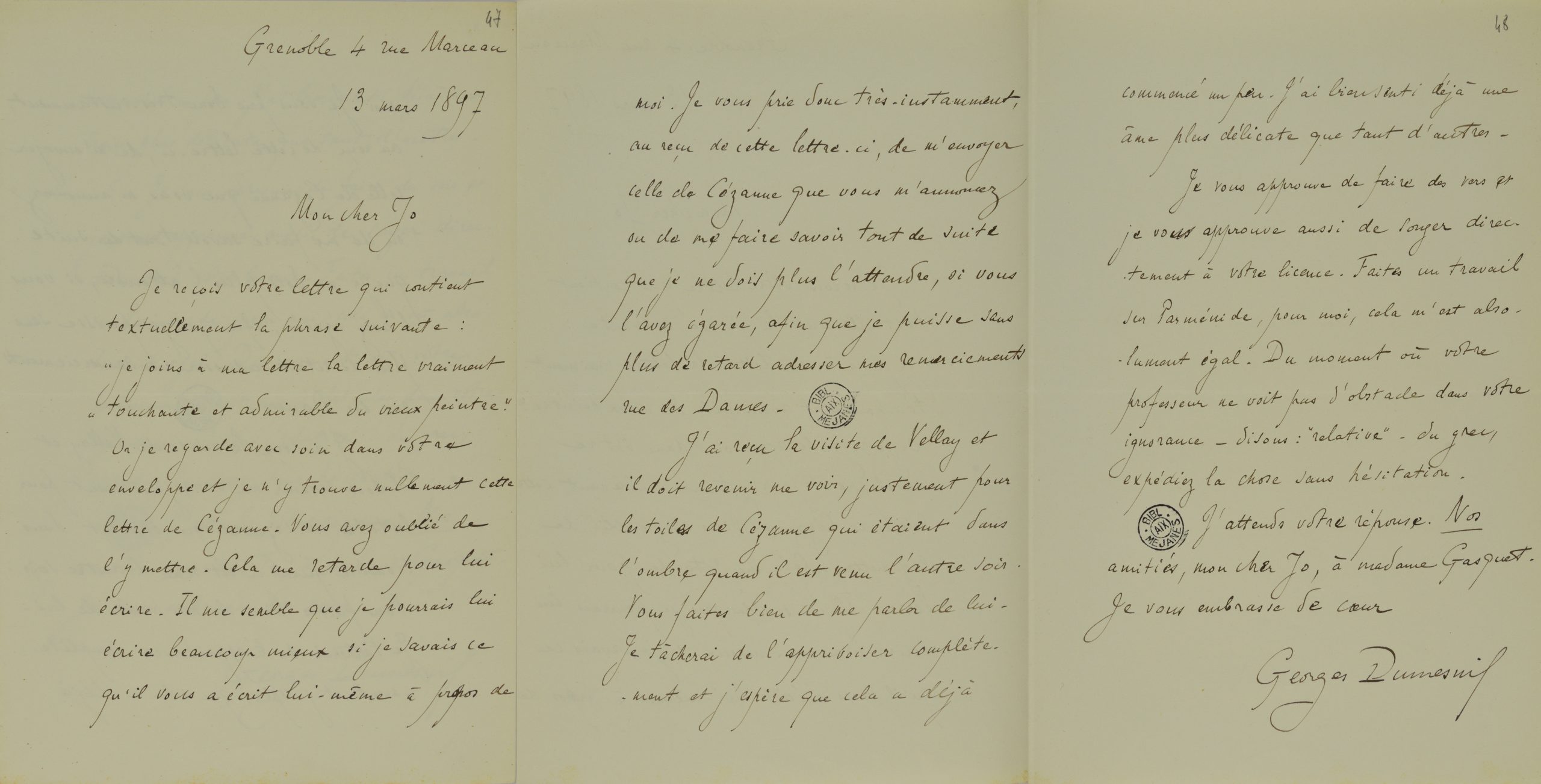
Fig. 10. Letter from Georges Dumesnil to Joachim Gasquet, 13 March 1897. Bibliothèque Méjanes, Aix-en-Provence, Ms. 1869 (1735). Photo Paul Smith.
The second, of 13 March 1897, refers to a letter (of 30 January 1897) from Cezanne to Gasquet concerning the paintings, which the writer forgot to enclose in his last letter to his mentor. The shows that it was important to Dumesnil to acknowledge the painter’s generosity appropriately, and that he attached considerable significance to his gift. The letter reads:
Je reçois votre letter qui contient textuellement la phrase suivante : ‘je joins à ma lettre la lettre vraiement touchante et admirable du vieux peintre.’ Or je regarde avec soin dans votre enveloppe et je n’y trouve nullemnt cette lettre de Cézanne. Vous avez oublié de la mettre. Cela me retarde pour lui écrire. Il me semble que je pourrais lui écrire mieux si je savais ce qu’il vous a écrit lui-même à propos de moi. Je vous prie donc très-instamment, au reçu de cette lettre-ci, de m’envoyer celle de Cézanne que vous m’annoncez ou de me faire savoir tout de suite que je ne dois plus l’attendre, si vous l’avez agréée, afin que je puisse sans plus de retard adresser mes remerciments rue des Dames.
In the same letter, Dumesnil mentions a visit from the Symbolist poet, Charles Vellay, adding: ‘il doit revenir me voir, justement pour les toiles de Cézanne qui étaient dans l’ombre quand il est venu l’autre soir.’ Evidently, Dumesnil considered it important to look at Cezanne’s work in the right light.
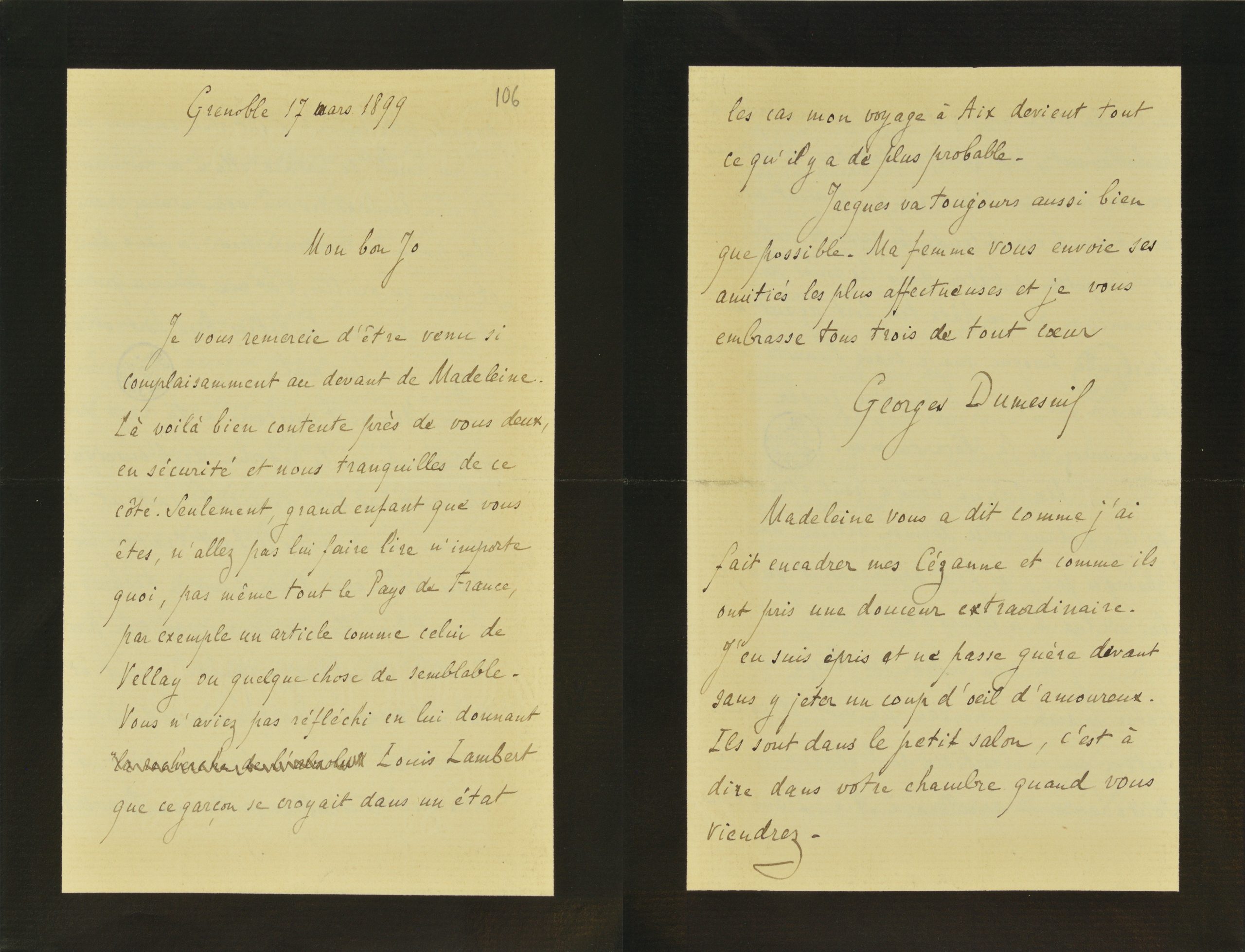
Fig. 11. Letter from Georges Dumesnil to Joachim Gasquet, 17 March 1899. Bibliothèque Méjanes, Aix-en-Provence, Ms. 1869 (1735). Photo Paul Smith.
A similar concern for viewing Cezanne’s paintings sympathetically informs a later unpublished letter from Dumesnil to Gasquet of 17 March 1899, which discusses frames. Here, the philosopher describes how ‘j’ai fait encadrer mes Cézanne et […] ils ont pris une douceur extraordinaire. J’en suis épris et ne passe guère devant sans y jeter un coup d’oeil d’amoureux. Ils sont dans le petit salon.’
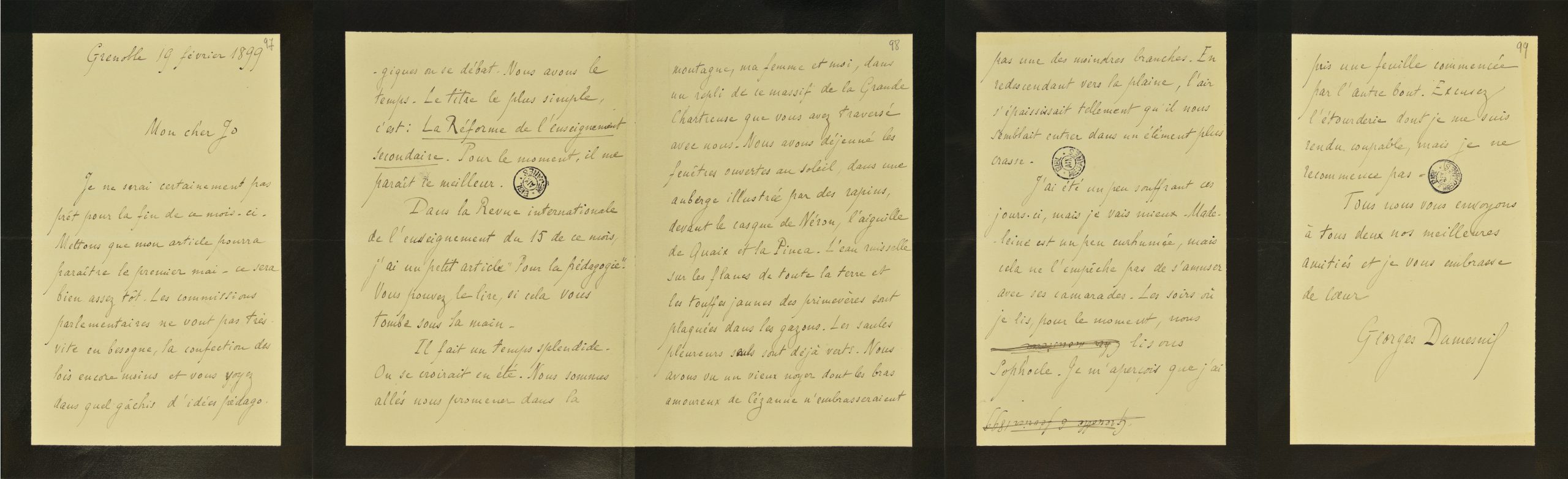
Fig. 12. Letter from Georges Dumesnil to Joachim Gasquet, 19 February 1899. Bibliothèque Méjanes, Aix-en-Provence, Ms. 1869 (1735). Photo Paul Smith.
Cezanne’s aforementioned love of trees features in an earlier letter from Dumesnil to Gasquet of 19 February 1899, which he wrote while on holiday near Grenoble. In this, he told his protégé: ‘Nous avons vu un vieux noyer dont les bras amoureux de Cézanne n’embrasserait pas une des moindres branches[23]Published in Smith, ‘Les payages tardifs’, p. 90..’ Undoubtedly, Dumesnil had in mind Cezanne’s Mont Sainte-Victoire au grand pin (FWN 235), which Gasquet owned, when he wrote this[24]On the writer’s acquisition of this painting from the artist in 1896, see Gasquet, Cézanne, pp. 54-55..
The same affection also emerges in the story the philosopher published in 1899, ‘L’Humanité des paysages’. In this the anonymous painter-protagonist states:
Il faudrait que les esthètes attentifs à leur moi vissent le peintre Paul Cézanne … courir dans la campagne, embrasser un arbre et s’écrier … ‘comme je voudrais, celui-là, le transporter sur ma toile!” Le bon artiste n’imagine pas qu’il puisse rien faire de mieux que de rendre avec son pinceau l’objet auquel son âme s’attache, auquel elle se donne et elle se voue[25]Georges Dumesnil, ‘L’humanité des paysages’, La Nouvelle revue, nouvelle série 1 (15 October-November-December 1899), pp. 401-414 (407)..
Jean Colrat, who discovered this article, has demonstrated that Gasquet rehearsed similar ideas in his 1921 monograph on Cezanne, from which he concludes that the Kantian view of subjectivity he attributed to the artist here actually represents the views of Dumesnil[26]See Jean Colrat, ‘Le Roman de Cézanne’, Société Paul Cezanne, 2019, https://www.societe-cezanne.fr/2019/07/15/le-roman-de-cezanne/.. Gasquet quotes Cezanne thus:
Le paysage se reflète, s’humanise, se pense en moi. Je l’objective, le projette, le fixe sur ma toile… L’autre jour, vous me parliez de Kant. Je vais bafouiller, peut-être, mais il me semble que je serais la conscience subjective de ce paysage, comme ma toile en serait la conscience objective…. Je ne suis pas un universitaire. Je n’oserais pas m’aventurer ainsi devant Dumesnil[27]Gasquet, Cézanne, p. 81. See Maurice Merleau-Ponty, ‘Le doute de Cézanne’, Fontaine: Revue mensuelle de la poésie et des lettres française, 9.47 (December 1945), pp. 80-100, where the philosopher famously used this statement to reinforce his argument the painter’s way of seeing involved a dissolution of the opposition between subject and object..
This is not the whole story, however, since – if Gasquet is to be trusted – Cezanne was in the habit of reciting the following verse concerning the way our souls attach themselves to the souls of objects, whenever something reminded him of his past: ‘Objets inanimés, avez-vous donc une âme / Qui s’attache à notre âme et la force d’aimer.’[28]Gasquet, Cézanne, p. 81. This in fact comes from Alphonse de Lamartine’s poem, ‘Milly, ou la terre natale’[29]Alphonse de Lamartine, Harmonies poétiques et réligieuses (Gosselin, 1830) 2, pp. 19-38 (20).. And not only Gasquet, but also Vollard, attest to Cezanne’s youthful enthusiasm for this poet’s work[30]Gasquet, Cézanne, p. 16; Ambroise Vollard, Paul Cézanne (Vollard, 1914), p. 4.. This is important, because it suggest that Gasquet’s animism resonated with Cezanne precisely because it chimed in with his own residual Romanticism.
Gasquet’s poems and novels
Gasquet’s animism – the belief that that the material world has a soul – is already apparent in Gasquet’s 1898 article Le sang provençal of spring 1898. Here, Gasquet writes:
Cette âme provençale … Paul Cézanne … nous l’apporta … il nous la révéla par cette sorte de sainteté lumineuse dont il imprègne ses paysages. L’attitude tourmentée ou pensive de ses roches, le rouge sang qu’il fait couler en tumulte sous la terre déchirée … l’air vivant, éblouissant … qui fait de toutes ces toiles comme autant d’autels dédiés au Père du soleil et du vent…. toutes ces nobles formes … nous indiquent que des paroles vont jaillir, comme aux temps bibliques, des arbres et des pierres, tout attend un sauveur, le monde veut un maître, l’âme de Provence veut descendre en quelqu’un[31]Joachim Gasquet, ‘Le sang provençale’, Les Mois dorés (March-April 1898), 373-381 (379)..
Gasquet expanded on his prophesy that that the soul of Provence will become incarnate in his poem, L’Enfant, first published in Le Pays de France, and subsequently as an offprint. This later edition is especially interesting since it contains an oblique dedication to Cezanne: ‘Sous les pins de Tholonet, parmi les rouges roches qu’aime à peindre le vieux maître Cézanne … j’ai trouve dans un VIRGILE … ces feuillets réunis entre les pages de la divlne Églogue à Pollion[32]Joachim Gasquet, L’Enfant (Dragon, 1900), n.p. On this poem, see Smith, ‘Joachim Gasquet’, pp. 11-12..’ This alludes to the fact, recorded by Marie Gasquet, that the painter converted his young admirer to reading Virgil[33]See Gasquet, Des chants d’amour, pp. 39-41..
Gasquet actually refers to this poem – a little elliptically – in his 1921 monograph on Cezanne, in the following passage, which comments on the hostility that other artists in Aix showed towards him:
Dernièrement un [artiste] voulant illustrer un poëme dédié au grand solitaire, a barbouillé au bas des nobles vers le calembour d’une tête d’âne, contre laquelle, les yeux fermés d’horreur, un petit amour — tout l’esprit courtois du dix-huitième siècle — décoche une flèche révoltée, mais de bon goût. « — Vous aimez Cézanne, a répondu celui-ci, je le déteste. Je prends position devant la postérité[34]Gasquet, Cézanne, p. 70.. »
Another text by Gasquet which relates closely to Cezanne is his novel, Il y a une volupte dans la douleur, published in 1921[35]On this text, see Smith, ‘Joachim Gasquet’, p. 18.. This lurid yarn tells the story of the recently bereaved poet Jean, who takes comfort in a torrid affair with Thérèse, the wife of a close friend, who may or may not be the reincarnation of his own dead wife, Claire.
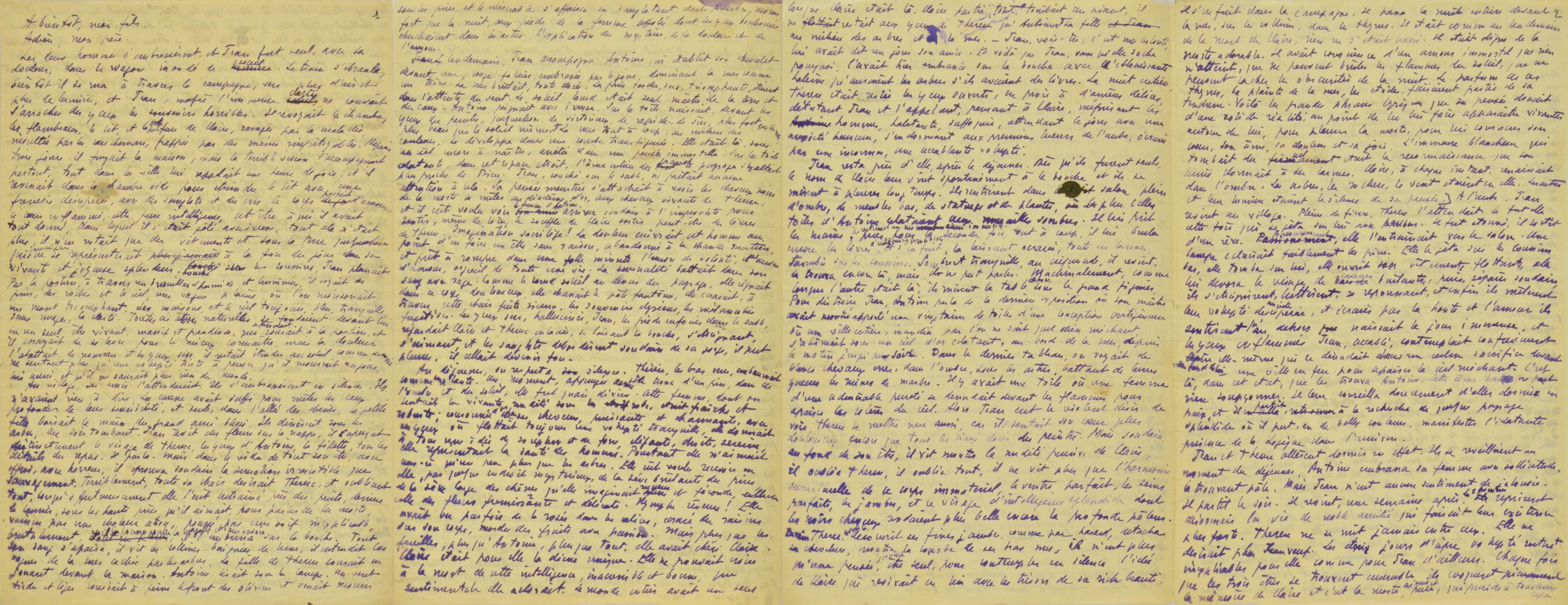
Fig. 13. First manuscript for Il y a une volupté dans la douleur, 1897 or 1898. Bibliothèque Méjanes, Aix-en-Provence, Ms. 1862 (1878). Photo Paul Smith.
The friend is question is a painter. In the first manuscript, of only four pages, which was written in 1897 or 1898, he is called Antoine. (And in the much longer manuscript of 1898 or 1899, he is called Pierre, as in the final version[36]This (second) 32-page manuscript is catalogued by the Bibliothèque Méjanes togther with the shorter version. The folder containing them is annotated: ‘1er Manuscrit de Il y a une volupté dans la douleur. Cette nouvelle, écrite à St Rémy en 1898, effraya G. Dumesnil – le Maître de philosophie de Gasquet – par sa “hardiesse morale”. / Dumesnil demanda à Gasquet d’attendre 20 ans avant de publier ces pages. Elles étaient sous presse en 1921 au moment de la mort de Gasquet et ont paru, comme oeuvre posthume, dans les Cahiers verts chez Grasset.’ The (second) manuscript is dated on the last page: ‘Saint-Rémy de Provence, août 1898’. This is followed by a dedication page to Paul Mariéton. Marie Gasquet states that Gasquet wrote this novel in 1899, and that it was Mariéton who told him not to publish it for twenty years; see Gasquet, Des Chants d’amour et des hymnes, pp. 42-43. There is a third manuscript in the Bibliothèque Méjanes, which is to all intents and purposes that of the published version. It carries a dedication to Georges Duhamel, as does the published text. It is therefore the manuscript Edmond Jaloux refers to in his preface to the published edition, where he states that Gasquet rewrote the text ‘en quelques jours’ in 1920-21 (although the folder containing it states the date of 1898); see Joachim Gasquet, Il y a une volupté dans la douleur (Grasset, 1921), viii-ix. Jaloux recalls that Gasquet read the (second) manuscript to him in 1900 (p. v)..) The two passages in the first manuscript which mention Antoine are repeated almost verbatim in the published novel. The first characterizes Antoine as an animist, who aims to capture the soul of nature. Describing a scene reminiscent of the one in Vue sur l’Estaque et le Château d’If of 1883-1885 (FWN 193), the passage reads:
Antoine … établit son chevalet devant une rouge falaise, embrasée par les jours, dominant la mer comme un trône. La mer brûlait, toute dorée. Les pins tordus, secs, triomphants, étaient dans l’attente du vent. Le soleil lourd était seul maître de la terre et des eaux. Antoine peignait avec ivresse. Sur la toile naissait, devant les yeux du peintre, quelque chose de victorieux, de rapide, de sûr, plus fort que les rocs, plus beau que le soleil même. La mer tout à coup, au milieu des couleurs, se développa dans une courbe transfigurée. Elle était là, sous le ciel encore à naître, arrêtée dans une pensée immortelle. Sur la toile éclatante, dans cet espace étroit, l’âme entière du chaud paysage s’exaltait plus proche de Dieu[37]In the published novel, Gasquet elaborates how God was nothing other than the souls of the dead, who lived on in the rocks and trees of the landscape, and manifested themselves in the light of the sun. See Smith, ‘Joachim Gasquet’, p. 18 and notes 48 and 49. Gasquet attributed Cezanne similar ideas in the manuscript of his 1912 article, ‘Le printemps de l’art’, (MS 1864 (1730) III, pp. 28-33. See also Joachim Gasquet, ‘Le Printemps d’un art’, Le Feu, no. 85 (May 1912), pp. 459-460, which describes how: ‘Le Motif ! Pour lui [Cezanne] c’était l’évidence sous les yeux, la collaboration fixée de la compréhension de l’homme avec l’émotion visible de la nature, la strophe atteinte de l’éternel poëme, Dieu palpable dans un de ses miracles.’ On this text, see McWilliam, The Aesthetics of Reaction, pp. 224-225; and Nancy Locke, Cezanne’s Shadows: Poussin, Chardin, Rubens (Pennsylvania State University Press, 2025), p. 132 n. 28..
The manuscript ends with Antoine indifferent to the events around him, interested only in: ‘la recherche de quelque douloureux paysage où il pût, en de belles couleurs, manifester l’éclatante présence de la Logique dans l’univers.’
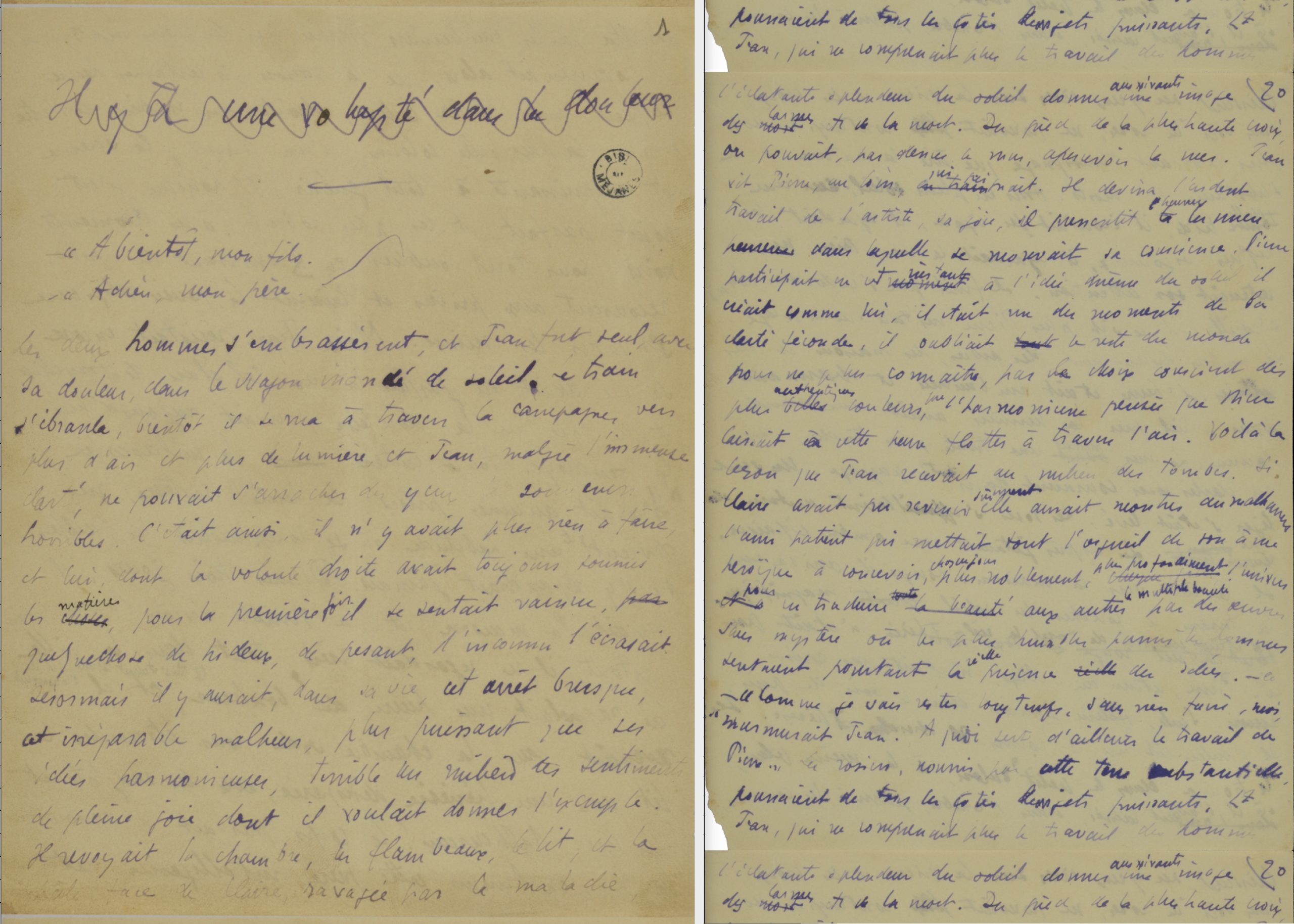
Figs. 14 and 15. Pages 1 and 20 of the second manuscript of Il y a une volupté dans la douleur, 1898 or 1899. Bibliothèque Méjanes, Aix-en-Provence, Ms. 1862 (1878). Photo Paul Smith.
A passage which first appeared in the second manuscript of 1898 or 1899 elaborates the idea that the artist expressed the presence of God in the sunlit landscape in his use of colour. This describes how:
Jean vit Pierre au loin, qui peignait. Il devina l’ardent travail de l’artiste, sa joie, il pressentit la lumière dans laquelle, en face de son paysage, se mouvait sa conscience. Pierre participait en cet instant à l’idée même du soleil, il créait comme lui, il était un des moments de la clarté féconde, il oubliait le reste du monde pour ne plus connaître, par le choix conscient des plus authentiques couleurs, que l’harmonieuse pensée que Dieu laissait à cette heure flotter à travers l’air.
Similarly, God features alongside colour in Gasquet’s article, ‘Le sang provençal’, thus:
Dieu se répand à travers le monde. Il a pétri la terre à la ressemblance de je ne sais quelle vérité. Tout correspond à tout. Nos destins sont inscrits dans la courbe des paysages. Rien n’est inutile. Tout sert à la vie de l’âme…. Voilà ce que l’oeuvre de ce grand peintre m’enseigna, quand je l’ai méditée, emportant dans mes yeux toutes ces calmes lignes qui s’enlacent, se complètent, s’unissent selon une logique colorée et forment pour l’âme qui les aime une écriture symbolique où l’on peut lire les plus graves leçons[38]Gasquet, ‘Le sang provençal’, p. 380..
And closely related ideas resurface in Gasquet’s Cezanne, in a passage where the painter is attributed the following pronouncement:
Je veux, moi, me perdre en la nature, repousser avec elle, comme elle, avoir les tons têtus des rocs, l’obstination rationnelle du mont, la fluidité de l’air, la chaleur du soleil…. Les couleurs, écoutez un peu, sont la chair éclatante des idées et de Dieu. La transparence du mystère, l’irisation des lois[39]Gasquet, Cézanne, p. 93..
In all these passages, then, Gasquet assimilates Cezanne to a personal cosmology in which the sunlit Provencal landscape has a soul, which is also God, and is imbued with logic by the same token.
The curious title of Gasquet’s novel is more complex than an apology for masochism. More particularly, ‘volupté’ is not simply the ‘amour’ of Montfort’s Naturisme, but it is the agent of a process akin to metempsychosis, wherein souls move between humans and other natural objects. This much at seems to be what Gasquet maintains in an article of 1897, published in La Plume, ‘L’histoire du naturisme’, which begins with the following paragraph about Cezanne:
Les douces herbes, les chairs et les parfums, les mille aliments qui trouvent leur gloire dans les proportions humaines de notre corps, où les sentiments et la pensée sont possibles, où se connaissent enfin et s’aiment tant de paysages et toute la matière éparse. La volupté est la plus active ouvrière de … métamorphose. Lorsqu’elle déborde de nos membres, il en jaillit une splendeur plus qu’humaine ; il flotte sur les corps enlacés quelque chose de surnaturel[40]Joachim Gasquet, ‘L’histoire du naturisme’, La Plume, no. 205 (1 November 1897), pp. 672-674 (674). On this article, see Athanassoglou-Kallmyer, Cézanne in Provence, p. 293 n. 107, which states that it was a revised reprint of an article which appeared in Les mois dorés in January of that year..
Such exorbitant beliefs were undoubtedly alien to Cezanne. But the artist may not have been quite so averse to his ideas about God and logic, or to the political dimension Gasquet attached to these.
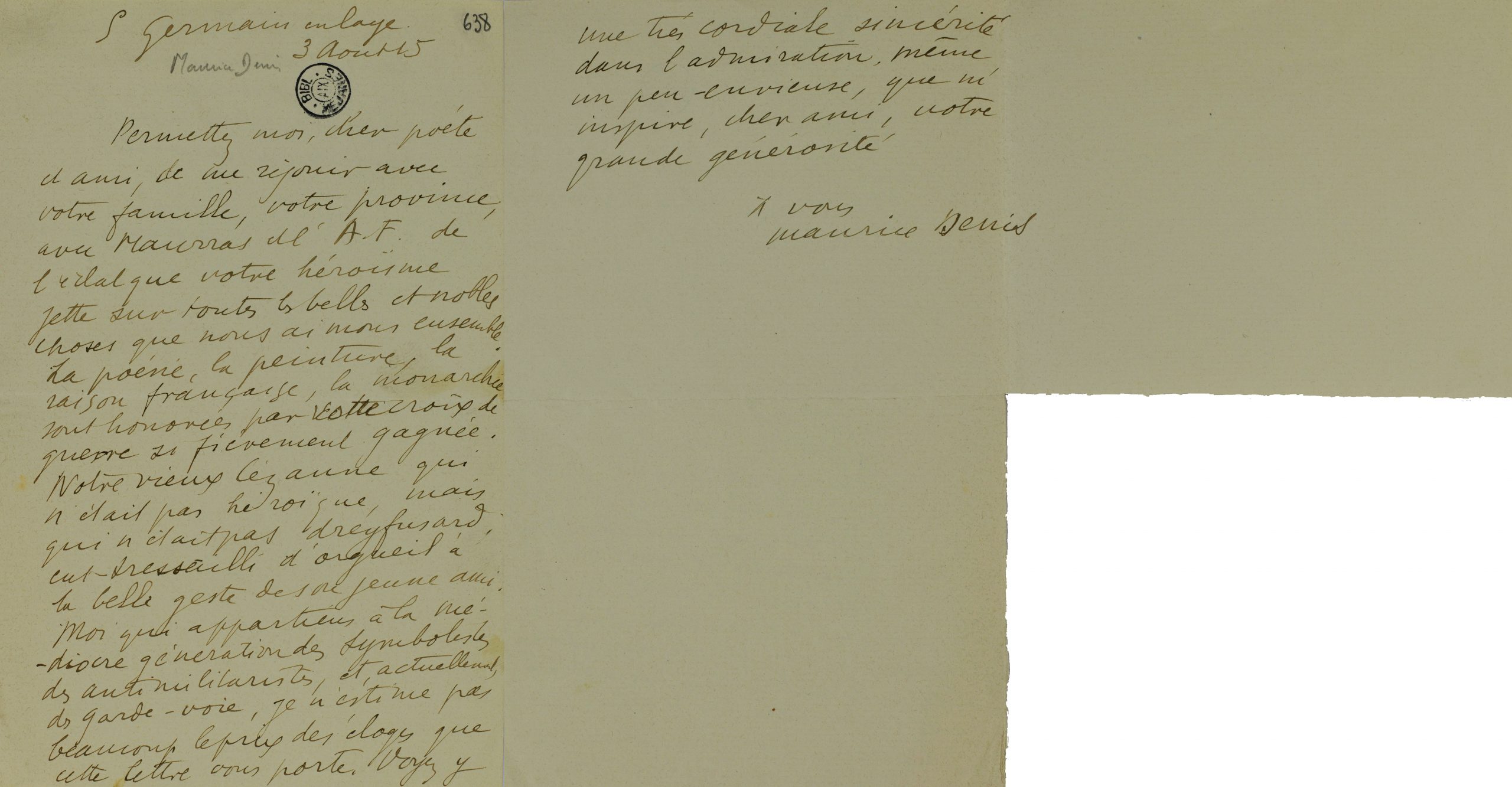
Fig. 16. Letter from Maurice Denis to Joachim Gasquet, 3 August 1915. Bibliothèque Méjanes, Aix-en-Provence, Ms 1868 (1734). Photo Paul Smith.
Maurice Denis effectively claimed as much in a letter 3 August 1915, which he sent Gasquet shortly after the latter was wounded in the first world war. In this, Denis characterised France, and the implicitly the Latin South, as the repository of Divine reason or Logic. Denis told him:
La poésie, la peinture, la raison française, la monarchie sont honorées par votre croix de guerre si fièrement gagnée. Notre vieux Cézanne qui n’était pas héroïque, mais qui n’était pas Dreyfusard, eût tressailli d’orgueil à la belle geste de son jeune ami.
To all intents and purposes, this letter rehearses the ideas about ‘les tendances héroïques du sang latin’ Gasquet had elaborated in his article of 1898, which Cezanne described in a letter to the writer of 22 June 1898 as ‘les superbes lignes dans lesquelles vous exaltez le sang provençal[41]Paul Cézanne, Correspondance (Grasset, 1978), p. 265.’.
The use of the word ‘race’ here is not entirely different from the one Gasquet made of it in his 1919 article, ‘Cézanne aux mendiants’, where he assimilated Cezanne to his own, by then, extreme right position. Here, he recalled how:
Que de fois, dans ce vaste examen de conscience que notre peuple était en train d’accomplir dans ses tranchées et où se sont revisées, une à une, toutes nos valeurs françaises, que de fois, dans la boue et sous les obus, en face de ces Barbares qu’il détestait, ai-je songé au vieux maître d’Aix, qui peignit la Sainte-Victoire !… Cézanne eut la passion de construire. Il est, dans son art, une des plus fermes assises de la race[42]Joachim Gasquet, ‘Cézanne aux mendiants’, Feuillets d’art, no. 4 (1919), pp. 42-44 (42). In a letter of 25 June 1903, Cezanne expressed his sympathy for the overtly racist ideas informing Louis Bertrand ‘belle préface’ to Gasquet’s, Les Chants séculaires (Ollendorff, 1903). See Cézanne, Correspondance, p. 295..
Letters from Joachim to Marie Gasquet
In places, the correspondence between Joachim and Marie Gasquet is amorous and sometimes sexually explicit. It is nevertheless surprising to find that Cezanne is embroiled in their sometimes extravagant exchanges along these lines.
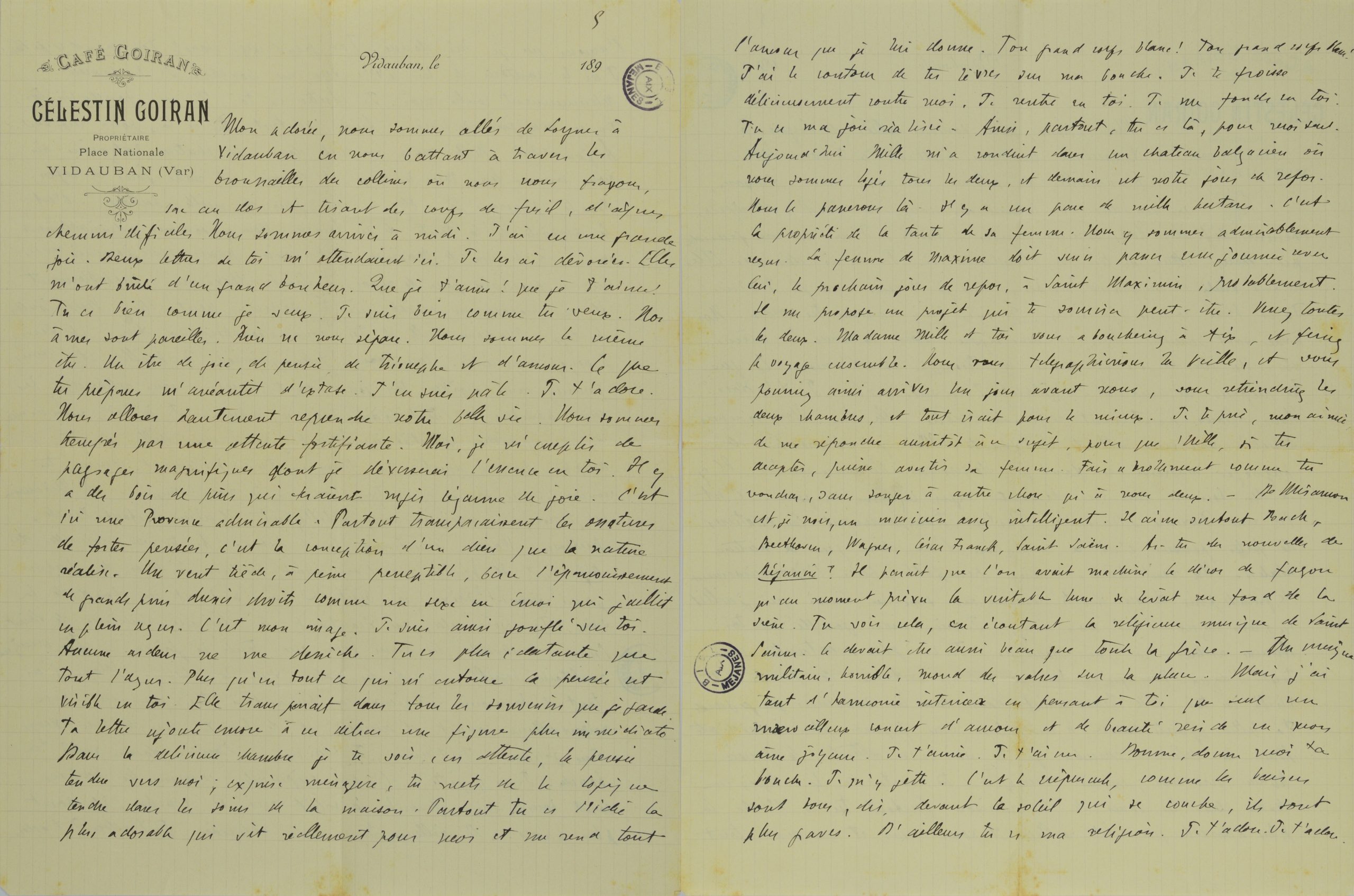
Fig. 17. Letter from Joachim to Maries Gasquet, 1898. Bibliothèque Méjanes, Aix-en-Provence, Ms 1875 (1741). Photo Paul Smith.
In a letter from Joachim to Marie of 1898, for example, Cezanne, the landscape, God, and sexual desire are all rolled into one. He writes:
Moi, je m’emplis de paysages magnifiques dont je déverserai l’essence en toi. Il y des bois de pins qui ferait rujir Cézanne de joie. Partout transparaisent les ossatures de fortes pensées, c’est la conception d’un dieu que la nature réalise. Un vent tiède, à peine perceptible, berce l’épanouisement de grands pins dressés droits comme un sexe en émoi qui jaillit en plein azur[43]Published in Smith, ‘Les paysages tardifs’, p. 91..
Perhaps Gasquet had Cezanne’s Le grand pin (FWN 236) in mind when he wrote this, although it is not certain that he owned it.
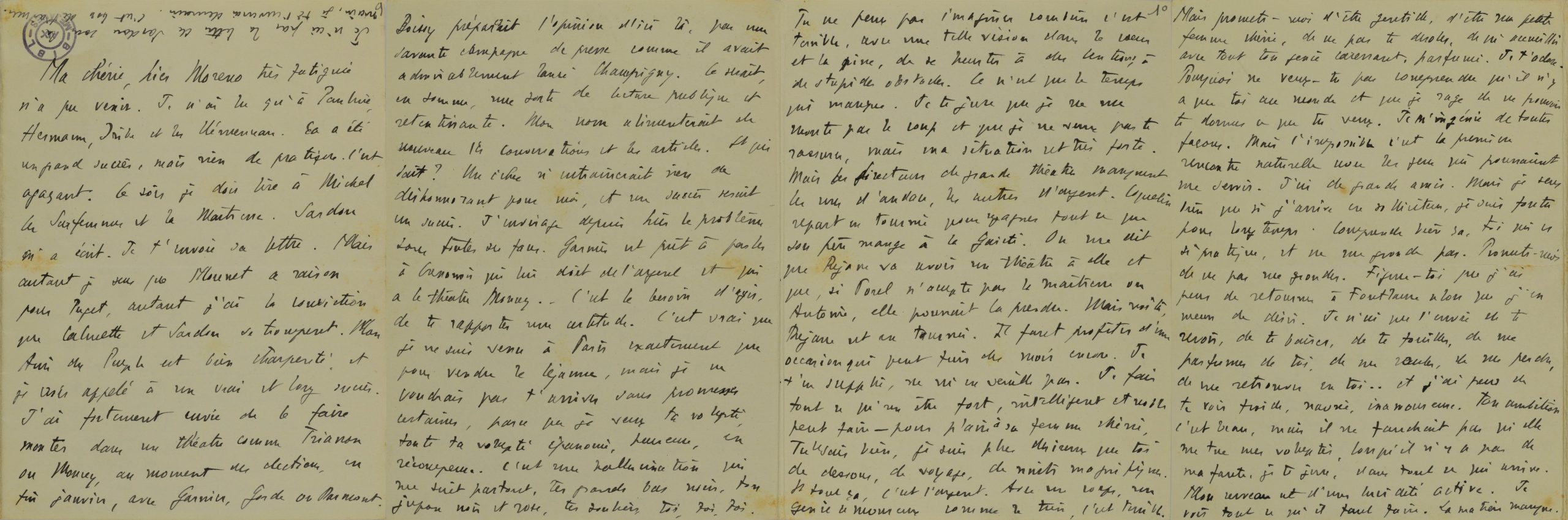
Fig. 18. Letter from Joachim to Marie Gasquet, 1905. Bibliothèque Méjanes, Aix-en-Provence, Ms 1875 (1741). Photo Paul Smith.
Predictably, the word ‘volupté’ features in their correspondence, although stripped of its metaphysical implications. Indeed, in a letter of ‘vendredi’ 1905 discovered by Jean Colrat, Gasquet makes it plain to Marie that his negotiating the sale of one of his Cezannes to Vollard in order to obtain her sexual compliance. He tells her:
C’est vrai que je ne suis venu à Paris exactement que pour vendre le Cézanne, mais je ne voudrais pas t’arriver sans promesses certaines, parce que je veux ta volupté, toute ta volupté, épanouie, heureuse, en récompense[44]Cited in part in Jean Colrat Jean, Cézanne: joindre les mains errantes de la nature (Presses de l’Université Paris-Sorbonne, 2013), p. 55..
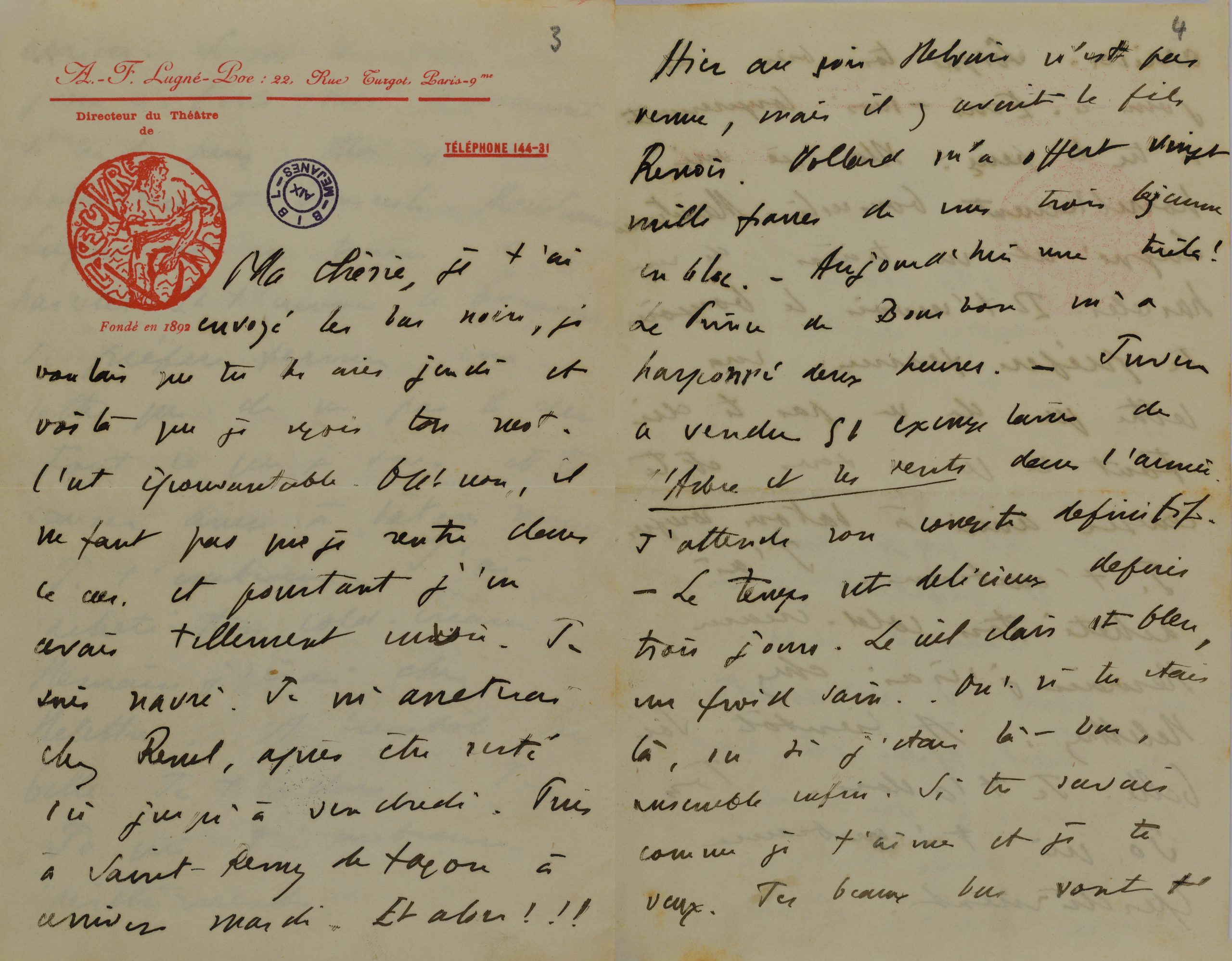
Fig. 19. Letter from Joachim to Marie Gasquet, 1905. Bibliothèque Méjanes, Aix-en-Provence, Ms 1875 (1741). Photo Paul Smith.
Another letter of the same year uncovered by Colrat, and written on Théâtre de l’Oeuvre notepaper, casts more light on Gasquet’s negotiations[45]see Colrat. Cézanne, p. 55, which cites MS 1875 (1741): ‘Je vais faire l’affaire… Il [Vollard] m’offre 1 000 francs du Van Gogh et 20 000 des tableaux de Cézanne’.. In this, he tells Maries: ‘Vollard m’a offert vingt mille francs de mes trois Cézanne en bloc[46]Cited in Colrat, Cézanne, p. 55..’
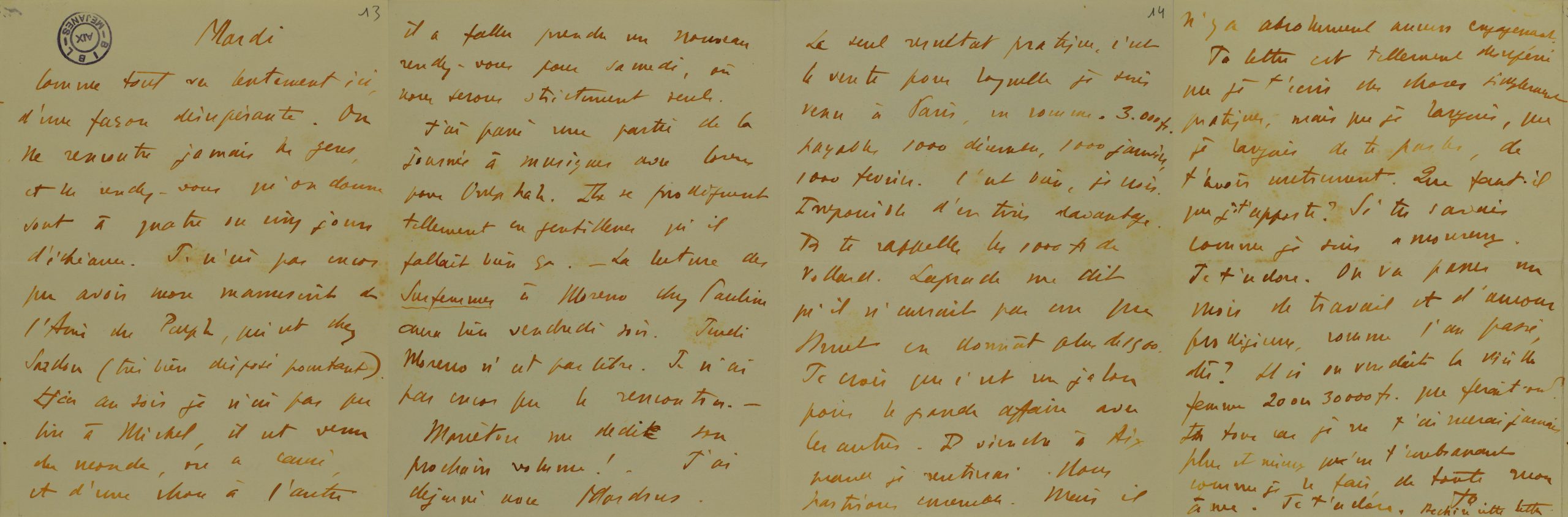
Fig. 20. Letter from Joachim to Marie Gasquet, 1905. Bibliothèque Méjanes, Aix-en-Provence, Ms 1875 (1741). Photo Paul Smith.
A third letter of 1905, concerns Gasquet’s dealings with Alfonse Eugène Druet, whose gallery opened in 1903. This informs Marie, once again mixing money and desire:
Le seul résultat pratique, c’est la vente pur laquelle je suis venu à Paris, en somme. 3.000fr. payable, 1000 décembre, 1000 janvier, 1000 février. C’est bien, je crois. Impossible d’en tirer davantage. Tu te rapelles le 1000 fr de Vollard. [Pierre?] Laprade m’a dit qu’il n’avait pas cru que Druet en donnât plus de 1500. Je crois que c’est un jalon pour la grande affaire avec les autres. D[ruet] viendra à Aix quand je rentrerai. Nous partirons ensemble… Je t’adore. On va passer un mois de travail et d’amour prodigieux, comme l’an passé dis ? Et si on vendait la vielle femme 20 ou 30000 fr. que ferait-on ?[47]I am indebted to Francois Chédeville for deciphering Druet’s name. The watercolour, Entrée de parc (FWN 1435-TA) may have formed part of the sale for three thousand francs that Gasquet mentioned, since this went directly from his collection to Druet’s gallery. Druet also acquired the last painting Gasquet mentions, La Vielle au chapelet (FWN 515).
Conclusion
Gasquet’s manuscripts unequivocally demonstrate that the Cezanne he constructed in his 1921 monograph voices many of the writer’s own animist beliefs, which were largely alien to the artist. Other aspects of Gasquet’s thinking seem to have been shared by Cezanne, particularly his love for Provence. It nevertheless remains difficult to demonstrate how knowledge of Gasquet’s works impacted on Cezanne’s works. The iconographical elements of it that relate most closely to Gasquet’s writings – pine trees, sunlight, blue sky, and red soil – are inherent to the Provencal landscape, and featured in Cezanne’s work before he met Gasquet[48]See Smith, ‘Joachim Gasquet’, pp. 17-19.. It is fair to conclude, therefore, that Gasquet’s thinking chimed in with Cezanne’s subject matter, rather than affected it significantly (One possible exception to this rule is La Montagne Sainte-Victoire au-dessus de la route du Tholonet (FWN 349).).[49]See Smith, ‘Joachim Gasquet’, p. 19 for a possible exception to this rule.
To large extent, therefore, Gasquet’s most important contribution to Cezanne’s work was to provide an ‘appui moral’ of the kind he received from Monet, Chocquet, and younger writers including Léo Larguier[50]See Cézanne, Correspondance, p. 246; Vollard, Paul Cézanne, p. 44; and Léo Larguier, Le Dimanche avec Paul Cézanne (L’Edition, 1920), p. 26. See also Cézanne, Correspondance, pp. 281 and 308; Gasquet, Cézanne, pp. 106 and 104; and Vollard, Paul Cézanne, p. 116.. This is expressed most poignantly in Cezanne’s letter of 4 January 1901, in which he tells the young writer:
Je viens vous remercier pour la bonne lettre que vous m’avez écrite. Elle me prouve que vous ne me lâchez pas. Si l’isolement trempe les forts, il est la pierre d’achoppement des incertains. Je vous avouerai qu’il est toujours triste de renoncer à vivre, tant que nous sommes sur terre. Me sentant moralement avec vous, je résisterai jusqu’au bout.
P. Cezanne
Although Cezanne was, in fact, already wary of Gasquet by this time, the letter attests to how close they had been only recently.
Références
| ↑1 | Paul Smith, ‘Joachim Gasquet, Virgil, and Cézanne’s Landscape: « My Beloved Golden Age »‘, Apollo, 147.439 (October 1998), pp. 11-23; and Paul Smith, ‘Les paysages tardifs de Cézanne, ou la perspective de la mort’, in Cézanne en Provence, ed. by Philip Conisbee and Denis Coutagne (Réunion des Musés nationaux, 2006), pp. 80-95 and 342-5. |
|---|---|
| ↑2 | Joachim Gasquet, Cézanne (Bernheim-Jeune, 1921). On the date of its writing, see the author’s biography by Marie Gasquet in Joachim Gasquet, Des Chants d’amour et des hymnes (Flammarion, 1928), p. 56. |
| ↑3 | For an in-depth account of the relationship between Cezanne’s, Gasquet, and the Félibres, see Nina Athanassoglou-Kallmyer, Cezanne and Provence: The Painter in His Culture (University of Chicago Press, 2003), pp. 217-231. For a searching study of the political dimension of Gasquet’s work and activities, see Neil McWilliam, The Aesthetics of Reaction: Tradition, Faith, Identity, and the Visual Arts in France, 1900–1914 (Brepols, 2021), pp. 191-237. |
| ↑4 | John Rewald, Cézanne, Geffroy, et Gasquet (Quatre Chemins/Editart, 1960) p. 7. See Joachim Gasquet, Cezanne, p. 78 (the short preface Gasquet to the second part of the book entitled Ce qui’il m’a dit), which states: ‘Je vais essayer de les [Cezanne’s statements] transcrire tels quels, m’aidant de ses lettres, autant de celles qu’il m’adressa que de celles que j’ai pu me procurer ou qui furent publiées par ceux qui les reçurent, comme la précieuse correspondance que nous communique M. Émile Bernard à la suite de ses Souvenirs. Toutes les fois que je le pourrai, je transcrirai les paroles mêmes de Cézanne. Je n’inventerai rien, — que l’ordre dans lequel je les présente.’ The book published here letters in their entirety. Those of 5 and 30 April 1896 (pp. 55 and 56) concern a contretemps. And the letter of 4 January 1901 published in facsimilie (p. 127), expresses the solidarity Cezanne felt for Gasquet. See also p. 43. For an analysis of the mostly very short excerpts that Gasquet made (and altered) from the letters he (and his father) received from Cezanne, see Conversations avec Cézanne, ed. by Michael Doran (Macula, 1978), pp. 106-161 and 206-214, nn. 2, 5, 6, 9, 12, 21, 31, 32, 98, and 99. |
| ↑5 | Letter from an unknown correspondent in the Bibliothèque Méjanes to John Rewald, 30 September 1959. |
| ↑6 | Rewald (Cézanne, Geffroy, et Gasquet), p. 8. |
| ↑7 | Rewald (Cézanne, Geffroy, et Gasquet), p. 55; citing Jacques-Emile Blanche, ‘Gasquet “L’Animateur”’, Comdedia, 13 May 1921. |
| ↑8 | Washington DC, National Gallery of Art Archives, John Rewald Papers, SC.03, Box 38. |
| ↑9 | Rewald, Rewald (Cézanne, Geffroy, et Gasquet), p. 42 n. 57. |
| ↑10 | Jaloux Edmond, Les Saisons littéraires 1896-1903 (Plon, 1921), vol. 1, p. 71; and Gasquet, Cézanne, 1921, 60. |
| ↑11 | Jaloux, Les Saisons littéraires, p. 75. |
| ↑12 | Cited in Smith ‘Les paysages tardifs’, p. 90. |
| ↑13 | On Montfort, see Athanassoglou-Kallmyer, Cezanne and Provence, pp. 216-217 and 219-220; and Nina Athanassoglou-Kallmyer, Art and Monist Philosophy in Nineteenth Century France From Auteuil to Giverny (Routledge, 2024), p. 148 n. 2. |
| ↑14 | See Isabelle Cahn, ‘Chronologie’, in Cézanne, ed. by Françoise Cachin and Joe Rishel (Réunion des musées nationaux, 1996), pp. 527-569 (p. 556). |
| ↑15 | Jean-Claude Lebensztejn, Paul Cezanne: Cinquante-trois lettres (L’Échoppe, 2011), p. 47. |
| ↑16 | Published in Smith, ‘Les paysages tardifs’, p. 90. The letter is datable to 1906 since the fact that it is on mourning stationary indicates it was written shortly after the death of Marie’s father, the Provençal poet Marius Girard. |
| ↑17 | Gasquet, Cézanne, 1921, 60. |
| ↑18 | Smith, ‘ Joachim Gasquet’, p. 15. Cezanne’s remark about the olive is recorded in Gasquet, Cézanne, p. 73; see also pp. 51, 72. |
| ↑19 | PQ 283 L4 LAK. The book previously belonged to Jean-Pierre Cezanne. |
| ↑20 | PQ 283 L4 LAK. |
| ↑21 | Maurice Le Blond, Essai sur le naturisme (Mercure de France, 1896), pp. 114-115. |
| ↑22 | See Athanassoglou-Kallmyer, Cézanne in Provence, pp. 179 and 283 n. 95. |
| ↑23 | Published in Smith, ‘Les payages tardifs’, p. 90. |
| ↑24 | On the writer’s acquisition of this painting from the artist in 1896, see Gasquet, Cézanne, pp. 54-55. |
| ↑25 | Georges Dumesnil, ‘L’humanité des paysages’, La Nouvelle revue, nouvelle série 1 (15 October-November-December 1899), pp. 401-414 (407). |
| ↑26 | See Jean Colrat, ‘Le Roman de Cézanne’, Société Paul Cezanne, 2019, https://www.societe-cezanne.fr/2019/07/15/le-roman-de-cezanne/. |
| ↑27 | Gasquet, Cézanne, p. 81. See Maurice Merleau-Ponty, ‘Le doute de Cézanne’, Fontaine: Revue mensuelle de la poésie et des lettres française, 9.47 (December 1945), pp. 80-100, where the philosopher famously used this statement to reinforce his argument the painter’s way of seeing involved a dissolution of the opposition between subject and object. |
| ↑28 | Gasquet, Cézanne, p. 81. |
| ↑29 | Alphonse de Lamartine, Harmonies poétiques et réligieuses (Gosselin, 1830) 2, pp. 19-38 (20). |
| ↑30 | Gasquet, Cézanne, p. 16; Ambroise Vollard, Paul Cézanne (Vollard, 1914), p. 4. |
| ↑31 | Joachim Gasquet, ‘Le sang provençale’, Les Mois dorés (March-April 1898), 373-381 (379). |
| ↑32 | Joachim Gasquet, L’Enfant (Dragon, 1900), n.p. On this poem, see Smith, ‘Joachim Gasquet’, pp. 11-12. |
| ↑33 | See Gasquet, Des chants d’amour, pp. 39-41. |
| ↑34 | Gasquet, Cézanne, p. 70. |
| ↑35 | On this text, see Smith, ‘Joachim Gasquet’, p. 18. |
| ↑36 | This (second) 32-page manuscript is catalogued by the Bibliothèque Méjanes togther with the shorter version. The folder containing them is annotated: ‘1er Manuscrit de Il y a une volupté dans la douleur. Cette nouvelle, écrite à St Rémy en 1898, effraya G. Dumesnil – le Maître de philosophie de Gasquet – par sa “hardiesse morale”. / Dumesnil demanda à Gasquet d’attendre 20 ans avant de publier ces pages. Elles étaient sous presse en 1921 au moment de la mort de Gasquet et ont paru, comme oeuvre posthume, dans les Cahiers verts chez Grasset.’ The (second) manuscript is dated on the last page: ‘Saint-Rémy de Provence, août 1898’. This is followed by a dedication page to Paul Mariéton. Marie Gasquet states that Gasquet wrote this novel in 1899, and that it was Mariéton who told him not to publish it for twenty years; see Gasquet, Des Chants d’amour et des hymnes, pp. 42-43. There is a third manuscript in the Bibliothèque Méjanes, which is to all intents and purposes that of the published version. It carries a dedication to Georges Duhamel, as does the published text. It is therefore the manuscript Edmond Jaloux refers to in his preface to the published edition, where he states that Gasquet rewrote the text ‘en quelques jours’ in 1920-21 (although the folder containing it states the date of 1898); see Joachim Gasquet, Il y a une volupté dans la douleur (Grasset, 1921), viii-ix. Jaloux recalls that Gasquet read the (second) manuscript to him in 1900 (p. v). |
| ↑37 | In the published novel, Gasquet elaborates how God was nothing other than the souls of the dead, who lived on in the rocks and trees of the landscape, and manifested themselves in the light of the sun. See Smith, ‘Joachim Gasquet’, p. 18 and notes 48 and 49. Gasquet attributed Cezanne similar ideas in the manuscript of his 1912 article, ‘Le printemps de l’art’, (MS 1864 (1730) III, pp. 28-33. See also Joachim Gasquet, ‘Le Printemps d’un art’, Le Feu, no. 85 (May 1912), pp. 459-460, which describes how: ‘Le Motif ! Pour lui [Cezanne] c’était l’évidence sous les yeux, la collaboration fixée de la compréhension de l’homme avec l’émotion visible de la nature, la strophe atteinte de l’éternel poëme, Dieu palpable dans un de ses miracles.’ On this text, see McWilliam, The Aesthetics of Reaction, pp. 224-225; and Nancy Locke, Cezanne’s Shadows: Poussin, Chardin, Rubens (Pennsylvania State University Press, 2025), p. 132 n. 28. |
| ↑38 | Gasquet, ‘Le sang provençal’, p. 380. |
| ↑39 | Gasquet, Cézanne, p. 93. |
| ↑40 | Joachim Gasquet, ‘L’histoire du naturisme’, La Plume, no. 205 (1 November 1897), pp. 672-674 (674). On this article, see Athanassoglou-Kallmyer, Cézanne in Provence, p. 293 n. 107, which states that it was a revised reprint of an article which appeared in Les mois dorés in January of that year. |
| ↑41 | Paul Cézanne, Correspondance (Grasset, 1978), p. 265. |
| ↑42 | Joachim Gasquet, ‘Cézanne aux mendiants’, Feuillets d’art, no. 4 (1919), pp. 42-44 (42). In a letter of 25 June 1903, Cezanne expressed his sympathy for the overtly racist ideas informing Louis Bertrand ‘belle préface’ to Gasquet’s, Les Chants séculaires (Ollendorff, 1903). See Cézanne, Correspondance, p. 295. |
| ↑43 | Published in Smith, ‘Les paysages tardifs’, p. 91. |
| ↑44 | Cited in part in Jean Colrat Jean, Cézanne: joindre les mains errantes de la nature (Presses de l’Université Paris-Sorbonne, 2013), p. 55. |
| ↑45 | see Colrat. Cézanne, p. 55, which cites MS 1875 (1741): ‘Je vais faire l’affaire… Il [Vollard] m’offre 1 000 francs du Van Gogh et 20 000 des tableaux de Cézanne’. |
| ↑46 | Cited in Colrat, Cézanne, p. 55. |
| ↑47 | I am indebted to Francois Chédeville for deciphering Druet’s name. The watercolour, Entrée de parc (FWN 1435-TA) may have formed part of the sale for three thousand francs that Gasquet mentioned, since this went directly from his collection to Druet’s gallery. Druet also acquired the last painting Gasquet mentions, La Vielle au chapelet (FWN 515). |
| ↑48 | See Smith, ‘Joachim Gasquet’, pp. 17-19. |
| ↑49 | See Smith, ‘Joachim Gasquet’, p. 19 for a possible exception to this rule. |
| ↑50 | See Cézanne, Correspondance, p. 246; Vollard, Paul Cézanne, p. 44; and Léo Larguier, Le Dimanche avec Paul Cézanne (L’Edition, 1920), p. 26. See also Cézanne, Correspondance, pp. 281 and 308; Gasquet, Cézanne, pp. 106 and 104; and Vollard, Paul Cézanne, p. 116. |
